



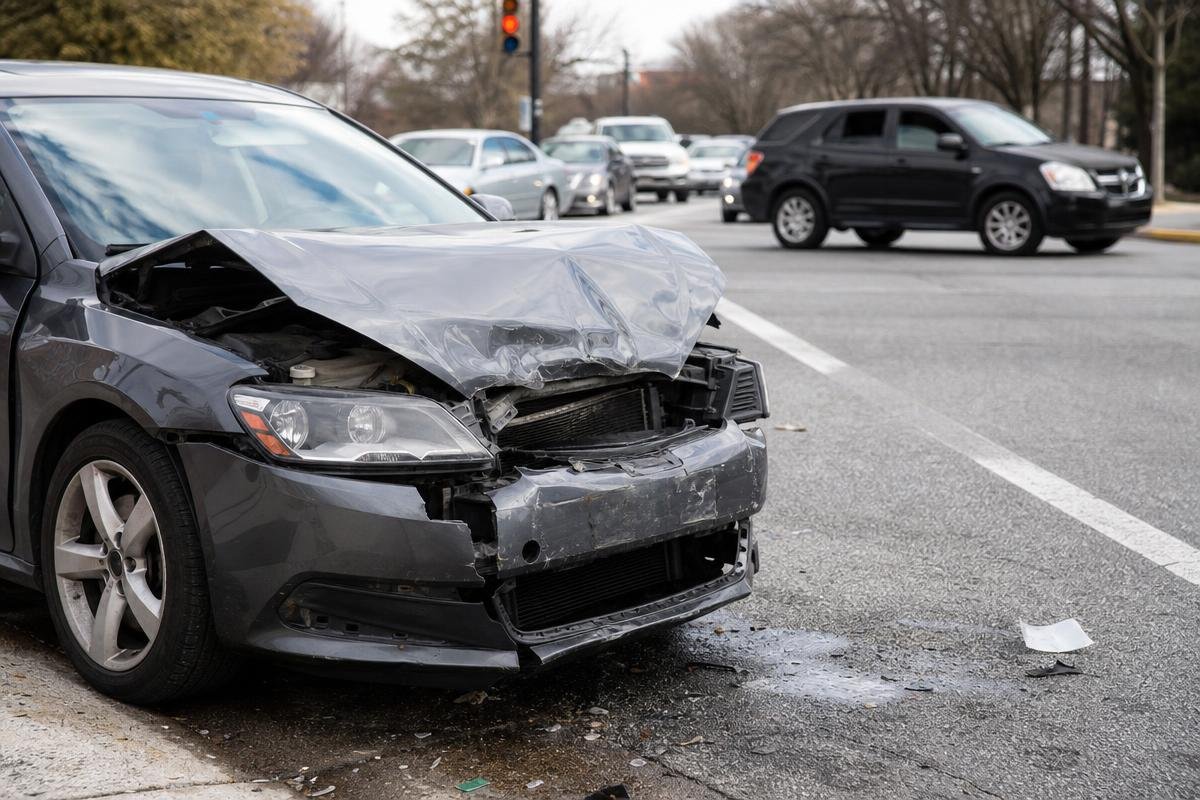
When you’ve been hurt in an Uber crash in Atlanta, one of the first questions you’ll have is how much your case is actually worth. The answer depends on several factors, including how seriously you were injured, which phase of Uber’s insurance coverage applies, and how aggressively your attorney pursues the claim.
At Cambre & Associates Injury & Accident Lawyers, we fight to recover the full compensation our clients deserve, and we know how to hold Uber and negligent drivers accountable under Georgia law. Hurt in an Atlanta rideshare crash? Get a free case evaluation from a team that answers the phone.
Key Takeaways
- Uber accident settlement values in Georgia vary widely based on injury severity, driver status, and available insurance coverage.
- Uber carries up to $1 million in liability coverage when a driver is actively transporting a passenger under Georgia law.
- The phase of the trip at the time of the crash directly controls which insurance policy applies to your claim.
- Minor injury claims may settle for a few thousand dollars, while serious injury cases can reach six or seven figures.
- An experienced Atlanta rideshare attorney can make a significant difference in the final settlement amount you recover.
Understanding Rideshare Accident Claims in Atlanta
Medical bills pile up fast. Missed work cuts into your income. And then you discover that rideshare claims involve multiple insurance policies that may or may not apply depending on what the driver was doing at the exact moment of the crash.
That last part is what makes a rideshare accident claim in Georgia structurally different from a standard car accident. Under Georgia Code § 33-1-24, coverage shifts through distinct phases tied to the driver’s app status. The policy that applies, and the dollar limits attached to it, can change your settlement value dramatically.
Below, you will find settlement ranges by injury severity, the factors that drive case value, how the insurance phases work under Georgia law, and the steps you should take after a crash to protect your claim.
What Are Typical Uber Accident Settlement Amounts in Atlanta?
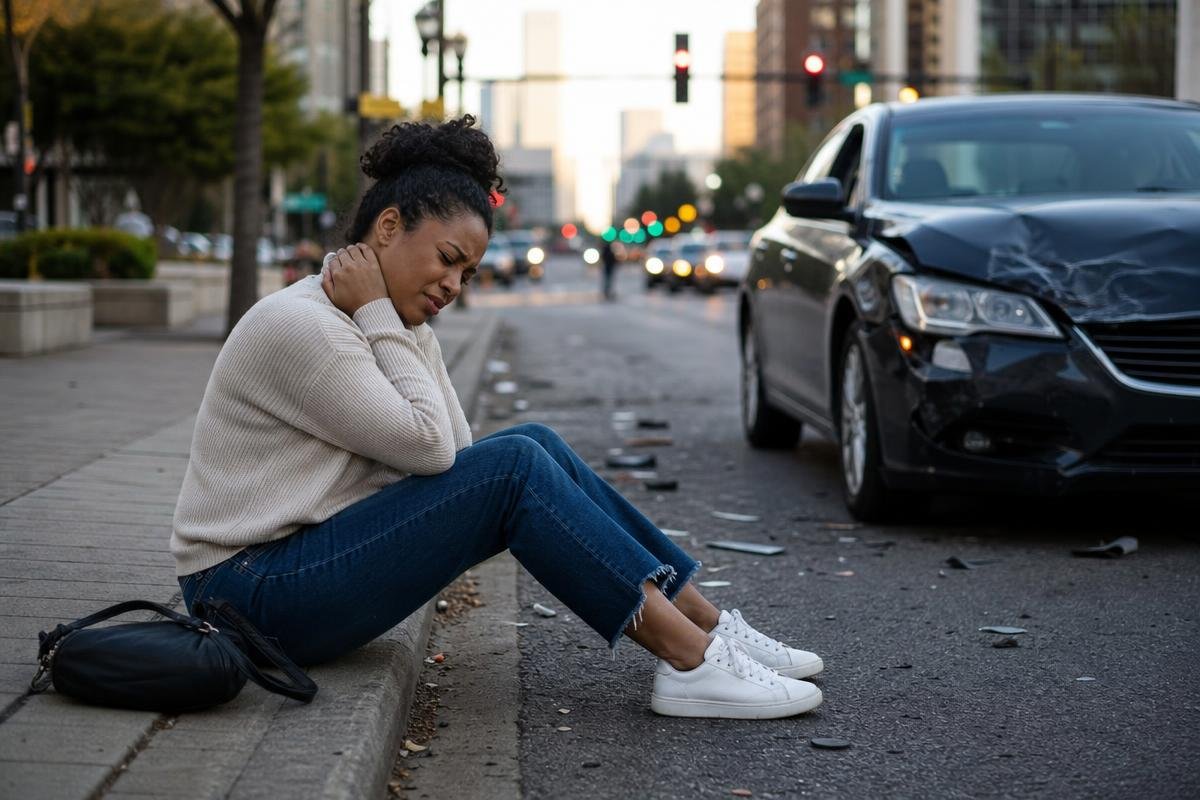
Atlanta Uber accident settlements range from roughly $10,000 for minor injuries to over $1 million for catastrophic cases, depending on injury severity and which insurance phase applies. There is no single average figure because every case turns on your injuries, the driver’s status in the app at the time of the crash, and how much coverage is available. Still, realistic ranges emerge from how these cases typically resolve under state law.
Minor Injury Settlements
Minor injury claims, including whiplash, soft tissue sprains, and minor lacerations, typically settle in the range of $10,000 to $75,000. These cases involve shorter recovery periods and lower medical costs. Even so, documentation matters from day one. A gap in treatment or a missed follow-up can significantly reduce what the insurance company will pay. Knowing what to expect after filing an auto accident claim in Atlanta can help you avoid those costly mistakes early in the process.
Moderate Injury Settlements
Fractures, herniated discs, torn ligaments, and injuries requiring surgery often fall in the $75,000 to $300,000 range. When a driver was actively transporting a passenger, the rideshare company’s $1 million liability policy comes into play under Georgia Code § 33-1-24, which governs rideshare insurance requirements in this state. That higher coverage ceiling makes meaningful recoveries possible for moderate injuries. Cases originating along the I-285 Perimeter corridor, a heavily traveled commercial trucking route, frequently fall in this tier due to highway-speed impact forces.
Severe and Catastrophic Injury Settlements
Traumatic brain injuries, spinal cord damage, permanent disability, and wrongful death claims can exceed $1 million. In cases involving willful misconduct or conscious indifference, Georgia Code § 51-12-5.1 allows courts to award punitive damages on top of compensatory recovery. That statute requires clear and convincing evidence of conscious indifference to consequences, a high bar that is rarely met in ordinary crashes.
In practice, punitive awards in Georgia rideshare cases are uncommon but have surfaced in DUI-related collisions, where a jury may add damages meant to punish rather than compensate. If a crash resulted in a fatality, questions to ask before hiring an Atlanta accidental death lawyer is a critical first step for surviving family members. These ranges are starting points, not guarantees. The next section explains the specific factors that determine where your claim actually lands.
How Does Uber’s Insurance Coverage Work in Georgia?
The most important and most misunderstood factor in any rideshare accident claim is what phase of the app the driver was in at the moment of the crash. Under Georgia Code § 33-1-24, rideshare companies must maintain specific insurance coverage tied directly to driver status. That phase determines the entire insurance landscape of your claim, and getting it wrong can cost you tens of thousands of dollars.
Phase 1: App Off
If the driver had the app completely off at the time of the crash, the company’s commercial insurance does not apply at all. The driver is treated as a private motorist, and only their personal auto policy covers your injuries. Under Georgia Code § 33-34-4, the state minimum is just $25,000 per person and $50,000 per accident.
If that driver carries only minimum limits and has no significant assets, your own uninsured or underinsured motorist coverage may be your best path to fair compensation. This is a situation where having an attorney review your own policy early makes a real difference.
Phase 2: App On, No Passenger
When the driver has the app active but has not yet accepted a ride, contingent liability coverage applies. The company provides $50,000 per person, $100,000 per accident, and $25,000 in property damage. The word “contingent” matters.
This coverage only activates if the driver’s personal policy denies the claim or their limits are exhausted first. Many victims, including those injured in the Buckhead entertainment district, wrongly assume the full commercial policy applies in this phase. It does not.
Not sure which insurance phase applies to your crash? We’ll review your case for free and identify every policy in play.
Phase 3: Ride Accepted or Passenger On Board
Once a ride is accepted or a passenger is in the vehicle, the full $1 million per-incident commercial liability policy activates. This is the coverage phase that produces the largest rideshare accident settlements.
The company also carries uninsured and underinsured motorist coverage during Phase 3 under state law. Passenger injury claims in this phase, including those originating near Hartsfield-Jackson, often settle for significantly higher amounts than Phase 2 claims. If you were a passenger at the time of the crash, your access to insurance coverage is at its strongest.
Identifying which phase applies is one of the first steps we take when a new case comes in. If you were injured in a rideshare crash anywhere from Dunwoody to East Point, we can help you determine exactly which coverage applies to your claim.
What Factors Determine the Value of Your Uber Accident Settlement?
No two rideshare cases are identical. Several interconnected factors determine whether a settlement lands at the lower end of the range or approaches the full policy limits available under the driver’s status at the time of the crash. Understanding these factors helps you make informed decisions from the start.
Severity and Permanence of Your Injuries
Injury severity is the single largest driver of settlement value. Under Georgia Code § 51-12-4, you can recover past and future medical expenses, lost wages, loss of earning capacity, pain and suffering, and loss of consortium. Permanent injuries, surgeries, and long-term disability push settlements significantly higher. Gaps in your medical treatment are the first tool insurance adjusters use to minimize your claim, so consistent care matters.
Liability and Driver Status
Which insurance phase applied at the moment of your crash directly shapes which policy limits are available. You can read a full breakdown of how driver status affects coverage in the How Does Uber’s Insurance Coverage Work in Georgia? section above. Beyond coverage, the state’s modified comparative fault rule under Georgia Code § 51-11-7 reduces your recovery proportionally if you share any fault, and bars it entirely at 50% or more. Expect the insurer to investigate your conduct aggressively.
Available Insurance Coverage and Policy Stacking
Multiple policies may apply to your crash at the same time. The driver’s personal policy, the company’s commercial policy, your own uninsured or underinsured motorist coverage, and a third-party driver’s policy can all come into play. State law allows UIM stacking in certain circumstances, which can meaningfully increase the total recovery available to you. An attorney can identify every applicable policy and pursue each one.
Your Conduct After the Accident
What you do in the hours and days after a crash can protect or damage your claim. Seek medical care immediately, follow your treatment plan, preserve photos and witness contact information, and do not give a recorded statement to any insurer without counsel. Rideshare app data, including GPS records, timestamps, and driver status logs, can be subpoenaed.
This is especially critical along the Downtown Connector, where accident circumstances are frequently disputed. That data must be preserved quickly before it is overwritten.
What Should You Do After an Uber Accident in Atlanta?
The steps you take in the hours and days after a rideshare crash can significantly affect the value of your settlement. Insurance adjusters begin building their defense immediately. You need to move quickly and carefully.
Step 1: Seek Medical Attention Immediately
Go to an emergency room or urgent care the same day, even if you feel fine. Adrenaline masks concussions, internal bleeding, and spinal injuries. Your initial medical record becomes the foundation of your injury claim. A delay between the accident and your first doctor visit is one of the first things an adjuster will use to argue your injuries were not serious.
Step 2: Document the Scene and Preserve Evidence
Photograph vehicle damage, your injuries, road conditions, skid marks, and any traffic signals. Get the driver’s name, license plate, and insurance information. Collect contact information from any witnesses. Most importantly, screenshot your trip history in the app right at the scene. That screenshot records the driver’s name, route, and timestamps, which establishes whether the driver was on an active ride when the crash happened. Near Midtown’s high-demand pickup zones, establishing that driver status is critical to unlocking the full insurance coverage available to you.
Step 3: Report Through the App, But Do Not Give a Recorded Statement
Report the crash through the app. Do not give a recorded statement to the rideshare insurance adjuster without an attorney present. Adjusters are trained to ask questions that minimize claims. Politely decline and tell them your attorney will be in contact.
Step 4: Contact an Atlanta Uber Accident Attorney
Call an attorney before you sign anything or accept any offer. We handle these settlement cases in Atlanta on a contingency fee basis, meaning you pay nothing unless we recover for you. If you want to understand what that means before you call, read our breakdown of how much a personal injury lawyer costs in Atlanta. The consultation is free.
When Can You Sue Uber Directly for an Accident in Georgia?
Many accident victims assume they can only pursue the driver after a rideshare crash. The reality is more nuanced. Under certain circumstances, a direct claim against the rideshare company itself is possible, and knowing the difference can significantly affect your settlement amount.
The Independent Contractor Defense and Its Limits
The company classifies its drivers as independent contractors, not employees. Georgia law generally does not hold a company liable for the torts of an independent contractor. However, that classification is not an absolute shield. Georgia courts have recognized that sufficient control over a contractor’s work can create employee-like liability, even when the company calls the relationship something else.
There is also a separate legal path that bypasses the employment debate entirely. Georgia Code § 33-1-24 imposes direct statutory insurance obligations on transportation network companies. This means the company carries specific coverage requirements as a matter of state law, regardless of how it classifies its drivers. Many victims in Alpharetta and across the metro area do not know this avenue exists. Our team does, and we use it.
Negligent Hiring and Retention Claims
If the company knew, or reasonably should have known, that a driver had a history of unsafe driving, criminal conduct, or other disqualifying background information, a negligent hiring or retention claim may exist directly against the company. The company’s background check process has been the subject of significant national litigation.
These claims require discovery into internal records, which is why pursuing a direct claim demands legal strategy that goes well beyond a standard insurance negotiation. The next section explains why experienced rideshare counsel matters.
Why Atlanta Uber Accident Victims Choose Cambre & Associates
We are not a call center. When you call us after a rideshare accident, you reach a real team that knows your case. Cambre & Associates has earned more than 500 reviews averaging 4.7 out of 5 stars from clients across the metro area, including those we have helped in Decatur and Dunwoody. That track record reflects one thing: we treat every case as if it were our own.
Responsive Communication From Day One
Clients consistently tell us the same thing. Their calls got answered. They received regular updates. Nothing fell through the cracks. Our dedicated case managers stay with you from the first consultation through final resolution. You should never have to wonder where your claim stands.
Fighting for the Maximum Settlement
We do not push clients toward fast, low offers. Rideshare insurers are well-funded and experienced at minimizing payouts. We pursue every dollar our clients deserve, including future medical costs, lost earning capacity, and non-economic damages under Georgia Code § 51-12-4. Clients have told us we got them more than they expected and the money they deserved.
Visit our office or call (770) 502-6116 to schedule your free consultation. Backed by more than 500 reviews averaging 4.7 out of 5 stars, our results speak for themselves. Ready to find out what your rideshare accident settlement could be worth? Our team is standing by. Call now.
Uber Accident Claims Across Atlanta and Surrounding Cities
Rideshare accident claims in this region are not limited to one zip code. High-volume zones include the curbside pickup lanes near College Park, the Perimeter area interchanges, and the I-85/I-75 interchange at Spaghetti Junction. That interchange’s complex merge patterns and high speeds make it a frequent site of multi-vehicle rideshare crashes.
The BeltLine trail corridor and Ponce City Market area generate frequent pedestrian-rideshare conflicts, especially at uncontrolled crossings. Late-night surge periods in zip codes 30303 and 30309 consistently produce a high share of the cases we handle.
We handle claims well beyond the city limits. If your accident happened in Marietta, GA, our team can help you pursue the full compensation you deserve. The same applies if you were injured in Decatur, GA or Sandy Springs, GA. We also serve clients from Roswell, Johns Creek, Smyrna, and Macon. Where the accident happened does not change your right to recover damages, and it does not change how hard we fight for you.
Every rideshare accident claim is local in one important way: the facts on the ground matter. Traffic patterns, road conditions, and driver behavior in each city shape how liability is established and how insurance coverage applies. Our team knows these roads.
Injured in a rideshare accident outside the city center? We handle claims across the entire region. Call us to talk through your options.
Ready to Find Out What Your Uber Accident Claim Is Worth?
If you were injured in a rideshare accident, the insurance process ahead of you is complex, but you do not have to face it alone. Evidence disappears fast. App data gets overwritten. Witnesses become harder to locate. Under Georgia Code § 9-3-33, you have two years from the date of your accident to file a personal injury claim. Waiting costs you options.
Our fee comes from your recovery, not your pocket. There is no cost to get started, and no payment unless we win your case. If you have questions about what the process looks like, our team can walk you through what injured clients in Tucker and surrounding communities typically experience after filing a claim.
Call (770) 502-6116 or fill out our online form to schedule your free consultation. We will review your rideshare accident claim, explain your options, and pursue the full compensation you deserve.
Frequently Asked Questions
How long does an Uber accident settlement take in Georgia?
It depends on the complexity of your case. Claims involving minor injuries and clear liability often resolve in three to six months. Cases with severe injuries, disputed fault, or direct rideshare company claims can take one to three years. We keep you informed at every stage so you are never left guessing.
Can I file a claim against Uber if another driver caused the crash?
Yes. As a passenger, you can pursue the at-fault driver’s insurance first. If that coverage falls short, the rideshare company’s uninsured and underinsured motorist coverage may provide additional recovery during an active trip. Identifying every available source of coverage is one of the first things we do in any rideshare accident claim.
What if the Uber driver was at fault? Does Uber’s insurance cover me as a passenger?
Yes. Once a trip is in progress, the rideshare company’s $1 million per-incident commercial liability policy activates. Under Georgia Code § 33-1-24, rideshare companies are required to maintain this coverage for exactly this scenario. You do not need to pursue the driver personally. The commercial policy is the primary source of recovery.
How much does it cost to hire an Uber accident attorney in Atlanta?
We work on a contingency fee basis. You pay no attorney fees unless we recover compensation for you. There are no upfront costs and no hourly charges. Read more about how much a personal injury lawyer costs in Atlanta before your consultation.
What is the statute of limitations for an Uber accident claim in Georgia?
Georgia Code § 9-3-33 gives you two years from the date of the accident to file a claim. Missing that deadline almost always bars recovery entirely. If a government entity such as MARTA is involved, the window may be shorter. Do not wait to get legal advice.
Can I still recover compensation if I was partially at fault for the Uber accident?
Possibly. Under Georgia’s modified comparative fault rule, Georgia Code § 51-11-7, your recovery is reduced by your percentage of fault as long as you are less than 50% responsible. Insurance adjusters routinely try to inflate your fault percentage to reduce what they pay. Having an attorney negotiate on your behalf protects against that tactic.
Should I accept Uber’s first settlement offer?
In most cases, no. First offers are designed to close claims quickly and cheaply. They rarely account for future medical expenses, long-term lost wages, or full pain and suffering. Once you sign a release, the claim cannot be reopened. A free consultation costs you nothing and could mean the difference between a minimal payout and the full compensation you deserve.
Call (770) 502-6116 or fill out our online form to schedule your free consultation. We will review your rideshare accident claim and explain your options. Our fee comes from your recovery, not your pocket. The two-year deadline under Georgia Code § 9-3-33 means every day matters. Call today.
Ready to Get Started with Cambre & Associates Injury & Accident Lawyers?
Call (770) 502-6116 to speak with our team directly. We’re ready to answer your questions, walk you through your options, and help you find the right solution for your needs. Whether you’re just starting to plan or ready to move forward, we’ll make the process simple and stress-free.
Reach out today and let’s talk about how we can help.