




Georgia’s seat belt laws are not just traffic rules with modest fines attached. For anyone involved in a car accident, they have direct consequences for safety, liability, and the ability to recover full compensation for injuries. And in 2025, those consequences changed significantly.
Below, we cover who must buckle up, what vehicles are covered, how the law applies to children, what the fines are for violations, and, critically, how Senate Bill 68, signed into law in April 2025, changed the legal picture for injury victims who were not wearing a seat belt at the time of a crash.
Georgia’s Seat Belt Requirements: The Basics
Georgia’s seat belt law is codified at O.C.G.A. § 40-8-76.1. It applies to passenger vehicles, a term the statute defines broadly to include every motor vehicle designed to carry 15 or fewer passengers that is used for the transportation of persons. Pickup trucks, vans, and sport utility vehicles all fall within this definition.
Who must wear a seat belt
Every occupant of the front seat of a passenger vehicle must wear a seat belt while the vehicle is being operated on any public road, street, or highway in Georgia. This applies to both the driver and any front-seat passenger, regardless of age.
Rear-seat passengers are also covered in many situations. Any minor under the age of 18 who is riding in a passenger vehicle must be restrained by a seat belt regardless of where they are seated. For passengers 18 and older riding in the rear seat, seat belt use is strongly encouraged but is not mandated by Georgia law in the same way it is for front-seat occupants.
The bottom line for most drivers is this: everyone in the front seat must be buckled, all passengers under 18 must be buckled regardless of where they sit, and any child under 8 must be properly restrained in an age-appropriate child safety seat or booster seat.
What vehicles are covered
The seat belt requirement applies to the broad category of passenger vehicles as defined by the statute. Motorcycles and motor-driven cycles are explicitly excluded, as they are governed by separate equipment requirements. Off-road vehicles are also excluded. Pickup trucks used by adults 18 and older in connection with normal farming operations are exempt from the requirement, a carve-out designed to address the burden on agricultural workers who frequently enter and exit vehicles during their workday. Vehicles manufactured before 1965 and vehicles not required to be equipped with seat belts under federal law are also exempt.
Child Restraint Requirements Under O.C.G.A. § 40-8-76
Georgia’s child passenger safety requirements are set out separately in O.C.G.A. § 40-8-76 and are more detailed than the general adult seat belt statute. For a comprehensive breakdown of child-specific requirements, see our guide to child car seat safety laws in Georgia. The key rules are summarized below.
Every driver transporting a child under 8 years of age in a passenger automobile, van, or pickup truck must secure that child in a child passenger restraining system that is appropriate for the child’s height and weight and approved under federal safety standards. The child restraint system must be installed and used according to the manufacturer’s instructions. A driver is not considered compliant unless the child restraint system is actually being used correctly.
Children under 8 must generally be placed in the rear seat of the vehicle. If the vehicle has no rear seating, or if all appropriate rear seating positions are occupied by other children, a child may be properly restrained in the front seat consistent with the applicable requirements.
Once a child reaches 8 years of age, or if a child’s height exceeds 4 feet 9 inches regardless of age, they may be restrained by a standard seat belt under O.C.G.A. § 40-8-76.1 rather than a child restraint system. Taxicabs and public transit vehicles are exempt from the child restraint requirements.
Fines and Penalties for Seat Belt Violations

Georgia’s seat belt fines are modest compared to many other states, which has long been a source of debate among traffic safety advocates. Understanding the precise penalty structure matters for drivers, particularly those transporting minors.
Adult seat belt violations
A driver or adult passenger who fails to comply with the front-seat seat belt requirement faces a fine of up to $15. Notably, Georgia law prohibits courts from adding costs of prosecution, surcharges, or additional fees to this fine, so the $15 cap is the actual financial exposure. The violation is not classified as a moving traffic violation, which means it does not add points to the driver’s license under normal circumstances.
Violations involving minor passengers aged 8 and older
When a minor passenger who is 8 years of age or older is not properly restrained by a seat belt, the driver of the vehicle is responsible, not the passenger. The fine for this violation is up to $25. The court is required to forward a record of the conviction to the Georgia Department of Driver Services.
Child restraint violations for children under 8
Violations involving a child under 8 who is not properly restrained in an appropriate child safety seat carry steeper fines. A first offense results in a fine of $50. A second offense carries a fine of $100. In addition to the monetary fine, the driver receives one point against their driver’s license for each improperly restrained child. These violations are reported to the Department of Driver Services.
Enforcement authority
Under Georgia law, a law enforcement officer may stop a vehicle for a seat belt violation only when the officer has a clear and unobstructed view of an unrestrained occupant. The seat belt violation cannot serve as the basis for a stop that then leads to investigation of other offenses. Noncompliance with seat belt requirements does not constitute probable cause for violation of any other code section.
Exemptions from Georgia’s Seat Belt Law
Georgia’s seat belt statute lists specific categories of persons and situations that are exempt from the general requirement. These exemptions are narrow and apply only to the circumstances described.
A driver or passenger who possesses a written statement from a physician confirming that the person is medically unable to wear a seat belt is exempt. A driver or passenger with an official certificate or license endorsement from another state or country indicating a medical inability to wear a seat belt is similarly exempt.
A driver operating a vehicle in reverse is exempt for that period of operation. Vehicles manufactured before 1965 are exempt. Vehicles that are not required to have seat belts under federal law are exempt. A vehicle operated by a rural letter carrier of the United States Postal Service while performing letter carrier duties is exempt. A vehicle being used to deliver newspapers is exempt. A vehicle performing emergency services is exempt.
The pickup truck exemption for agricultural use applies only when the vehicle is being used by a driver or occupant 18 years of age or older in connection with agricultural pursuits that are usual and normal to that person’s farming operation. Simply owning a farm does not make all truck trips exempt; the exemption applies to the actual conduct of normal farming activities.
SB 68 and the Seat Belt Defense: A Major 2025 Change
For decades, a provision of Georgia’s seat belt statute protected injury victims in a way that affected virtually every car accident lawsuit in the state. Under O.C.G.A. § 40-8-76.1(d), evidence that an occupant failed to wear a seat belt was entirely inadmissible in civil litigation. The law stated explicitly that seat belt non-use “shall not be considered evidence of negligence or causation, shall not otherwise be considered by the finder of fact on any question of liability of any person, corporation, or insurer, shall not be any basis for cancellation of coverage or increase in insurance rates, and shall not be evidence used to diminish any recovery for damages.” This provision, known among attorneys as the seat belt gag rule, had been in place since 1988.
On April 21, 2025, Georgia Governor Brian Kemp signed Senate Bill 68 into law. Among its provisions, SB 68 repealed that longstanding protection. The seat belt gag rule is gone. In personal injury lawsuits filed after the effective date of SB 68, defendants and their insurers can now introduce evidence that an injured person was not wearing a seat belt and argue that non-use contributed to the severity of their injuries.
What this means for Georgia injury victims
The practical impact of this change is significant. Georgia uses a modified comparative negligence system under which an injured person’s compensation is reduced by their percentage of fault. If a jury finds the injured person 50 percent or more at fault, they recover nothing. Before SB 68, seat belt non-use was completely off the table. After SB 68, defense attorneys and insurers can present that evidence to a jury and argue that an unbelted occupant bears partial responsibility for the severity of their injuries. Read the full breakdown of how comparative negligence works in our guide to understanding Georgia comparative negligence law.
The argument is not that failing to wear a seat belt caused the accident. It never does. The other driver’s negligence still caused the collision. But the defense can now argue to a jury that the injuries were more severe than they would have been with proper restraint, and that the injured person shares some percentage of fault for that additional severity. If a jury accepts that argument and assigns 50 percent or more of fault to the injured party, the right to any recovery disappears entirely.
National Highway Traffic Safety Administration data supports the position that seat belts significantly reduce injury severity: unbelted front-seat passengers face substantially higher risks of fatal injury in crashes than belted ones. Georgia’s own data has shown that unrestrained occupants represent a disproportionate share of traffic fatalities relative to their share of the driving population. Defense attorneys will use this kind of data at trial. Catastrophic injuries cases, where damages are highest and defense motivation to limit exposure is greatest, will see the most aggressive use of this evidence.
What has not changed
The other driver’s negligence remains the primary question in any accident case. Seat belt non-use did not cause the crash. A rear-end collision is still the fault of the following driver. A driver who ran a red light is still liable for the accident. SB 68 did not create a blanket defense that eliminates liability for at-fault drivers. What it created is a new tool for insurers to attack the damages portion of a claim by arguing the injured party contributed to their own injury severity by not buckling up.
Cases where the injured person was wearing their seat belt are entirely unaffected. In those cases, the defense has no new evidence to introduce on the seat belt question. SB 68 only matters when the injured person was unrestrained.
Why legal representation matters more than ever after SB 68
For Georgia drivers and passengers who were not wearing a seat belt at the time of a crash, SB 68 makes having an experienced attorney considerably more important than it was before. An attorney can challenge the factual and biomechanical basis for any seat belt defense argument, retain expert witnesses who can testify about injury causation and the specific mechanics of the crash, and ensure that the primary focus at trial remains on the at-fault driver’s conduct rather than on what the injured person was or was not doing before the collision. The ability to recover full compensation for pain and suffering damages and other losses now depends more heavily on how well that case is built.
The Safety Case for Seat Belt Use in Georgia
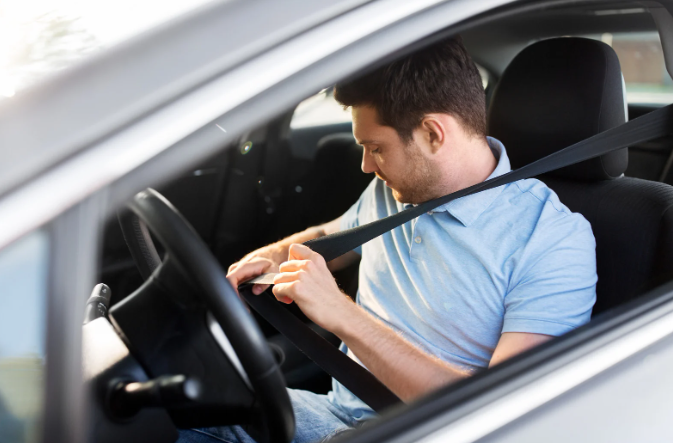
Beyond the legal requirements and the litigation consequences, seat belt use is simply the most effective single action any driver or passenger can take to reduce injury severity in a crash. Georgia data has consistently shown that unrestrained occupants are dramatically overrepresented in fatal crash statistics relative to their share of vehicle miles traveled. The safety benefits of restraint systems are well-documented across decades of crash research, and no amount of legal argument changes the underlying physics of what a properly fitted seat belt does to manage the forces of a collision. Back and neck injuries and soft tissue and joint injuries remain among the most common outcomes of collisions where occupants are not properly restrained.
Wearing a seat belt does not prevent accidents. But in the event of a crash caused by another driver’s negligence, being properly restrained protects both your body and, now under Georgia’s 2025 law, your right to recover full compensation. The single most important safety and legal step any Georgia driver or passenger can take is to buckle up on every trip, every time.
Frequently Asked Questions
Are back-seat passengers required to wear seat belts in Georgia?
Adult passengers 18 and older riding in the rear seat are not required by Georgia’s seat belt statute to wear a seat belt, though it is strongly advisable both for safety and, following SB 68, for legal protection in the event of a crash. All passengers under 18 must wear a seat belt regardless of seating position. Children under 8 must be in an appropriate child safety seat or booster seat regardless of where they are seated.
What is the fine for not wearing a seat belt in Georgia?
The fine for a front-seat seat belt violation is up to $15 for an adult. When a minor passenger aged 8 or older is not buckled, the driver faces a fine of up to $25. When a child under 8 is not properly secured in an appropriate child restraint system, the fine is $50 for the first offense and $100 for a second offense. The driver also receives one license point per improperly restrained child under 8.
Can police pull me over just for not wearing a seat belt in Georgia?
Yes. Georgia is a primary enforcement state, meaning law enforcement officers can stop a vehicle solely because they observe an unrestrained occupant. The officer must have a clear and unobstructed view of the violation. However, the seat belt violation cannot by itself create probable cause for investigation of other offenses.
I was not wearing a seat belt when I was injured in a crash. Can I still recover compensation?
Yes, but the legal picture is more complicated following Georgia’s SB 68, signed in April 2025. Before that law, evidence of seat belt non-use was completely inadmissible in civil injury cases. After SB 68, defendants can introduce that evidence and argue it contributed to injury severity under Georgia’s comparative negligence framework. You can still recover as long as you are found less than 50 percent responsible for your own injuries. The strength of the case for the at-fault driver’s liability, and the quality of your legal representation in countering the seat belt defense, become particularly important factors.
Does a seat belt ticket affect my insurance in Georgia?
A seat belt violation involving only an adult occupant in the front seat is not classified as a moving violation and does not add points to the driver’s license under normal circumstances. However, for violations involving children under 8 who are not properly restrained, one point per child is added to the driver’s license record. Points can affect insurance rates. Georgia law explicitly prohibits insurers from using seat belt non-use as a basis for canceling coverage or raising premiums, though that provision predates SB 68 and its continued application under the new law may be subject to legal development.
What are the seat belt rules for rideshare passengers in Georgia?
Passengers in Uber, Lyft, and other rideshare vehicles are subject to the same seat belt requirements as passengers in any other passenger vehicle. Front-seat passengers must be buckled. Passengers under 18 must be buckled regardless of seating position. The driver of a rideshare vehicle is responsible for ensuring that minor passengers are properly restrained. For questions about injury claims involving rideshare vehicles, see our guide on car accidents and the specific considerations that apply to rideshare collisions.
Does SB 68 apply to accidents that happened before April 2025?
SB 68 was signed into law on April 21, 2025, and its provisions apply to cases governed by the new statute going forward. Whether the new seat belt evidence rules apply to accidents that occurred before the effective date but were litigated after it is a question that will be resolved as courts interpret the new law. If your accident occurred before April 2025, an attorney can advise you on how the transitional rules are being applied in Georgia courts.
About Cambre & Associates
Cambre & Associates is a personal injury law firm representing accident victims throughout metro Georgia, with offices in Atlanta and Macon. The firm serves injured clients across the region, including Marietta and Decatur, and communities throughout the greater Atlanta area. Led by Glenn Cambre Jr., a former U.S. Navy serviceman and Wall Street professional recognized as Lawyer of the Year by the American Institute of Legal Professionals, the team of six experienced attorneys has recovered millions of dollars for clients injured through no fault of their own. The firm operates on a contingency fee basis, meaning no fees are owed unless compensation is recovered.
Injured in a Georgia Car Accident? Get a Free Case Evaluation.
Whether you were wearing a seat belt or not at the time of your crash, if another driver’s negligence caused your injuries, you have the right to pursue compensation. The attorneys at Cambre & Associates are available around the clock to review your case at no cost. Call (770) 502-6116 or schedule your free consultation today. No fees unless we win.