




A car accident can happen in seconds, but the decisions you make in the minutes and hours that follow have consequences that can stretch for months or years. The actions you take at the scene, the evidence you preserve, and the steps you follow when dealing with insurance companies all directly affect your health, your legal rights, and your ability to recover fair compensation.
Georgia has specific laws that govern driver conduct after a collision, and failing to follow them can complicate an otherwise strong claim. Here is every step to take after a car accident in Georgia, from the moments at the scene through the weeks that follow.
Step 1: Check for Injuries and Move to Safety
Your first priority after any collision is the safety of everyone involved. Before anything else, check yourself and your passengers for injuries. Adrenaline is powerful enough to mask pain in the immediate aftermath of a crash, so a thorough self-assessment matters even if you feel fine. If anyone is injured, unconscious, or in obvious distress, call 911 immediately and request both police and medical assistance.
If your vehicle is drivable and it is safe to do so, move it out of the travel lane. Georgia’s “Steer It, Clear It” law requires drivers to move operable vehicles out of active traffic lanes after a crash that does not involve serious injuries or death. Leaving your car in the roadway when it can be safely moved is not only a traffic hazard, it can also result in a citation from responding officers. Pull to the nearest shoulder, median, or parking lot, and turn on your hazard lights.
Do not attempt to move anyone who may have suffered a spinal injury. If a person is unconscious or complaining of neck or back pain, leave them in place and wait for emergency responders unless staying put creates an immediate danger to their life.
Step 2: Call 911 and Request a Police Report
Under O.C.G.A. § 40-6-273, drivers are required to notify law enforcement promptly when an accident results in injury, death, or apparent property damage of $500 or more. In practice, most accidents between vehicles on Georgia’s roads will meet that threshold. Call 911 and report the crash even if the other driver suggests handling it privately. That suggestion should itself be a warning sign.
When officers arrive, cooperate fully and give an accurate account of what happened. Stick to the facts of what you observed and experienced. Do not speculate about fault or make statements that could be interpreted as an admission of responsibility. Something as simple as “I didn’t even see you” can be used against you later in ways you did not intend.
Ask the responding officer for their name, badge number, and the report number or the agency where you can obtain the completed report. Police reports are typically available within a few days and become one of the foundational documents in any insurance claim or personal injury case. If you believe information in the report is inaccurate once it is available, it can sometimes be corrected.
Read more about what to do if a report contains errors in our guide on whether a police report can be changed after an accident.
Step 3: Exchange Information With the Other Driver
While waiting for police to arrive, exchange the following information with every other driver involved in the crash. Get their full legal name, home address, phone number, driver’s license number, license plate number, vehicle make and model, and the name and policy number of their auto insurer. If possible, photograph both sides of their insurance card directly.
Keep your own exchanges factual and civil. You are not required to discuss fault, explain your driving decisions, or provide any information beyond what is legally required. Do not apologize, even if you feel the impulse to do so. Georgia follows a modified comparative negligence system, and any admission of partial fault can reduce the compensation you are entitled to recover.
If the other driver becomes aggressive or refuses to provide their information, do not escalate. Note their plate number if visible, observe as many identifying details as you can, and report the situation to the police when they arrive. Leaving the scene of an accident is a crime in Georgia under O.C.G.A. § 40-6-270, and if the other driver flees, that information becomes part of the official record.
Step 4: Document the Scene Thoroughly
Evidence gathered at the scene is often the most valuable evidence in a car accident claim, and it becomes unavailable once vehicles are moved, roads are cleared, and memories begin to fade. Use your phone to document as thoroughly as possible while you wait for the police.
Photograph every vehicle from all four sides, capturing overall damage and close-up detail on any dents, scrapes, or deformation. Photograph the full accident scene, including road conditions, lane markings, traffic signals, stop signs, and any obstructions that may have contributed to the crash. If there are skid marks, debris fields, or fluid on the road, photograph those as well. Capture weather conditions, lighting, and the time on your phone screen to establish a timestamp.
If there are witnesses, get their names and contact information before they leave. A busy responding officer may not collect every witness statement, but your attorney can follow up with those individuals later. Note anything the other driver says at the scene, including any admissions, and write it down as soon as you can while your memory is clear.
Video documentation is increasingly useful. Walk the scene and narrate what you observe while recording. A 60-second walkthrough of the scene can capture context that still photos miss.
Step 5: Seek Medical Attention Promptly
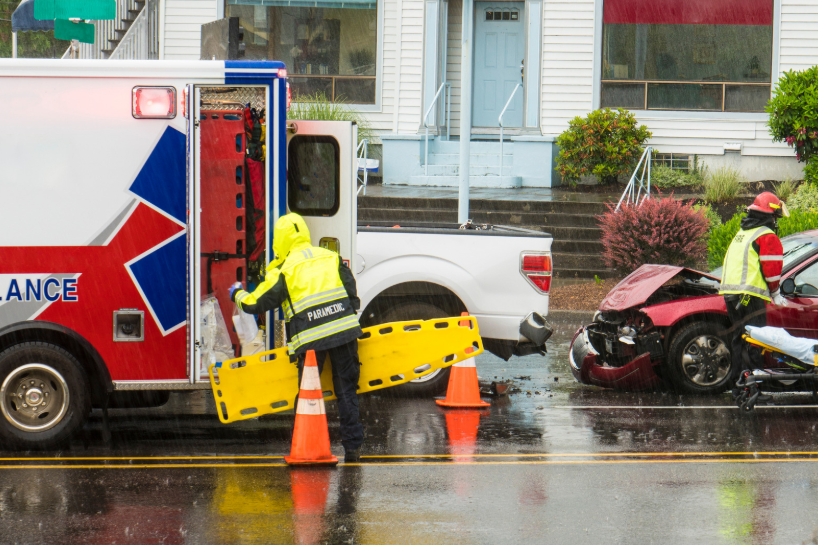
Even if you feel uninjured after a crash, see a medical provider within 24 to 72 hours. Many common accident injuries, including whiplash, soft tissue damage, and concussions, do not produce obvious symptoms immediately. Back and neck injuries in particular are notorious for feeling manageable at the scene and becoming significantly more painful within 24 to 48 hours as inflammation develops.
From a legal standpoint, the timing of medical treatment is critical. Insurance companies routinely argue that a gap between the accident and first treatment means the injuries were not caused by the crash, were not serious, or did not occur at all. Seeking care promptly creates contemporaneous medical records that directly link your injuries to the collision, which forms the foundation of your damages claim.
Follow every recommended treatment plan and attend all scheduled follow-up appointments. Gaps in treatment give insurers ammunition to dispute the extent of your injuries. Keep copies of all medical bills, imaging results, prescription records, and physician notes. If your injuries are severe, catastrophic injuries such as traumatic brain injuries or spinal cord damage may require specialists whose documentation carries particular weight in litigation.
Ask your provider whether your health insurance, Georgia MedPay coverage, or a medical lien arrangement is the appropriate way to handle costs before your case resolves. An attorney can help you understand these options so that treatment decisions do not inadvertently complicate your recovery.
Step 6: Notify Your Insurance Company
Report the accident to your own insurer promptly. Most auto policies include notification requirements, and failing to report in a timely manner can jeopardize your coverage. When you make the initial report, keep it factual: describe what happened, where, and when, and confirm that a police report was filed.
You are not required to give a recorded statement to your own insurer immediately, and you should never give one to the other driver’s insurance company without legal representation. The other driver’s insurer is not on your side. Their adjusters are trained to ask questions in ways that minimize fault on their insured’s part and reduce the value of your claim. Politely decline recorded statements until you have spoken with an attorney.
If the other driver’s insurer contacts you directly, it is perfectly acceptable to tell them you will have your attorney handle all communications. That statement cannot be used against you, and it immediately levels the playing field in a negotiation that the insurer starts with a significant informational advantage over most accident victims.
If your claim is denied or the settlement offer does not come close to covering your actual losses, learn more about suing an insurance company for denying a claim in Georgia, including the bad faith remedies available under state law.
Step 7: Understand Georgia’s Comparative Negligence Rules
Georgia applies a modified comparative negligence system under O.C.G.A. § 51-12-33. Under this rule, your compensation is reduced by your percentage of fault for the accident. If you are found to be 50 percent or more at fault, you are barred from recovering any damages at all. Read the full breakdown of how this works in our guide to understanding Georgia comparative negligence law.
This is why statements made at the scene, to police, and to insurance companies matter so much. Every piece of information collected in the aftermath of a crash can be used to assign percentages of fault. An insurer representing the other driver has strong financial motivation to establish that you bear some share of responsibility, because even a 20 percent fault allocation reduces their payout by that proportion.
A personal injury attorney can analyze the evidence, consult accident reconstruction professionals if needed, and push back against inflated fault attributions that insurers sometimes rely on to minimize payouts.
Step 8: Protect Your Property Damage Claim
Injury claims and property damage claims run on parallel tracks, and your vehicle damage requires its own attention. Do not accept a quick cash settlement from the other driver’s insurer for your vehicle without understanding the full scope of the damage. A preliminary estimate does not always account for hidden structural damage that becomes apparent during repair.
Georgia also recognizes diminished value claims, which compensate you for the reduction in your vehicle’s market value as a result of having been in an accident, even after it has been fully repaired. A car with an accident history is worth less than the same vehicle with a clean record, and Georgia law allows owners to pursue that difference as a separate component of their claim.
Learn more about how to pursue a diminished value claim in Georgia and what documentation is required to support one.
Step 9: Be Careful About What You Say and Post
The weeks following a car accident are a period when what you say, write, and post publicly can significantly affect the outcome of your claim. Avoid discussing the accident on social media. Do not post about your physical condition, your activities, or anything related to the crash or your recovery. Insurers and defense attorneys routinely monitor claimants’ social media accounts, and even an innocuous photo of you standing at a family event can be used to argue that your injuries are not as severe as claimed.
Do not discuss the details of your claim with coworkers, neighbors, or acquaintances. Keep communication about the accident and your injuries within the protected channels of your attorney-client relationship. If someone contacts you claiming to represent the other driver’s insurer, their attorney, or a third-party investigator, do not speak with them outside the presence of your own attorney.
Step 10: Consult a Car Accident Attorney Before Accepting Any Settlement

Initial settlement offers from insurance companies are almost never the maximum the insurer is willing to pay. They are opening offers designed to close a claim quickly and at the lowest possible cost. Once you accept a settlement and sign a release, your claim is finished, regardless of whether your medical costs continue to accumulate or new injury symptoms emerge. Consulting a car accident attorney before signing anything is one of the most consequential decisions you can make after a Georgia crash.
An attorney experienced in Georgia personal injury law can calculate the true value of your claim, accounting for current and future medical expenses, lost income, reduced earning capacity, pain and suffering, and any other compensable losses. They can negotiate with insurers from a position of full information rather than urgency, and they can file suit if the insurer refuses to pay fair value.
Georgia’s statute of limitations for personal injury claims is generally two years from the date of the accident under O.C.G.A. § 9-3-33. For property damage only, the period extends to four years. Claims against government entities may have significantly shorter notice requirements, sometimes as brief as six months under O.C.G.A. § 36-33-5. An attorney can identify every deadline that applies to your specific situation.
Frequently Asked Questions
Do I have to call the police after a car accident in Georgia?
Yes, if the accident involves injury, death, or property damage of $500 or more, you are required to notify law enforcement under O.C.G.A. § 40-6-273. For minor accidents with no apparent injuries and minimal damage, reporting is still strongly advisable because an official report creates an objective record that protects you if a dispute arises later.
What should I not say to the other driver at the scene?
Do not apologize, admit fault, or make statements that could be interpreted as taking responsibility for the crash. Avoid phrases like “I did not see you” or “I should have braked sooner.” Stick to exchanging the required information and leave fault determinations to the police, insurers, and if necessary, the courts. Georgia’s comparative negligence rules mean that admissions made at the scene can reduce your compensation.
Can I still recover damages if I was partially at fault?
Yes, under Georgia’s modified comparative negligence law, you can recover damages as long as you are less than 50 percent responsible for the accident. Your total recovery is reduced by your percentage of fault. For example, if you are found 25 percent at fault and your total damages are $100,000, you can recover $75,000. If you are found 50 percent or more at fault, you recover nothing.
What happens if the other driver has no insurance?
If the at-fault driver is uninsured, your own uninsured motorist coverage becomes your primary source of compensation for medical bills, lost wages, and other damages. If they are underinsured, your underinsured motorist coverage can bridge the gap between their policy limits and your actual losses. Georgia law requires insurers to offer UM/UIM coverage, and if you never signed a written rejection, you likely have it on your policy.
How long do I have to file a car accident claim in Georgia?
Georgia law generally gives you two years from the date of the accident to file a personal injury claim, and four years for a property damage claim. If the at-fault party is a government entity such as a city or county, notice must often be given within six months under O.C.G.A. § 36-33-5. Missing these deadlines typically results in a permanent bar on recovery, regardless of how strong the underlying claim may be.
Should I accept the first settlement offer from the insurance company?
No. First offers from insurers are generally well below the full value of a claim. Accepting a settlement and signing a release ends your right to pursue any additional compensation, even if your injuries turn out to be more serious or more costly than initially understood. Consult with a personal injury attorney before accepting any offer or signing any document from an insurance company.
What types of damages can I recover after a Georgia car accident?
A successful claim can recover economic damages including medical expenses, lost wages, and property repair or replacement costs, as well as non-economic damages for pain and suffering, emotional distress, and diminished quality of life. In cases involving particularly egregious conduct, punitive damages may also be available. A personal injury attorney can identify all compensable losses and document them in a way that supports maximum recovery.
About Cambre & Associates
Cambre & Associates is a personal injury law firm serving accident victims throughout metro Georgia, with offices in Atlanta and Macon. The firm represents clients across the region, including Marietta and Decatur, and communities throughout the greater Atlanta area. Led by Glenn Cambre Jr., a former U.S. Navy serviceman and Wall Street professional recognized as Lawyer of the Year by the American Institute of Legal Professionals, the team of six experienced attorneys has recovered millions of dollars for injured clients. The firm works on a contingency fee basis, meaning no fees are owed unless compensation is recovered.
Injured in a Georgia Car Accident? Talk to an Attorney Before You Settle
The steps you take after a crash matter, and so does the legal team in your corner. If you or someone you love was injured in a car accident anywhere in the Atlanta metro area or across Georgia, the attorneys at Cambre & Associates are available 24/7 to review your case at no cost. Call (770) 502-6116 or schedule a free consultation today. We do not charge any fees unless we win.