



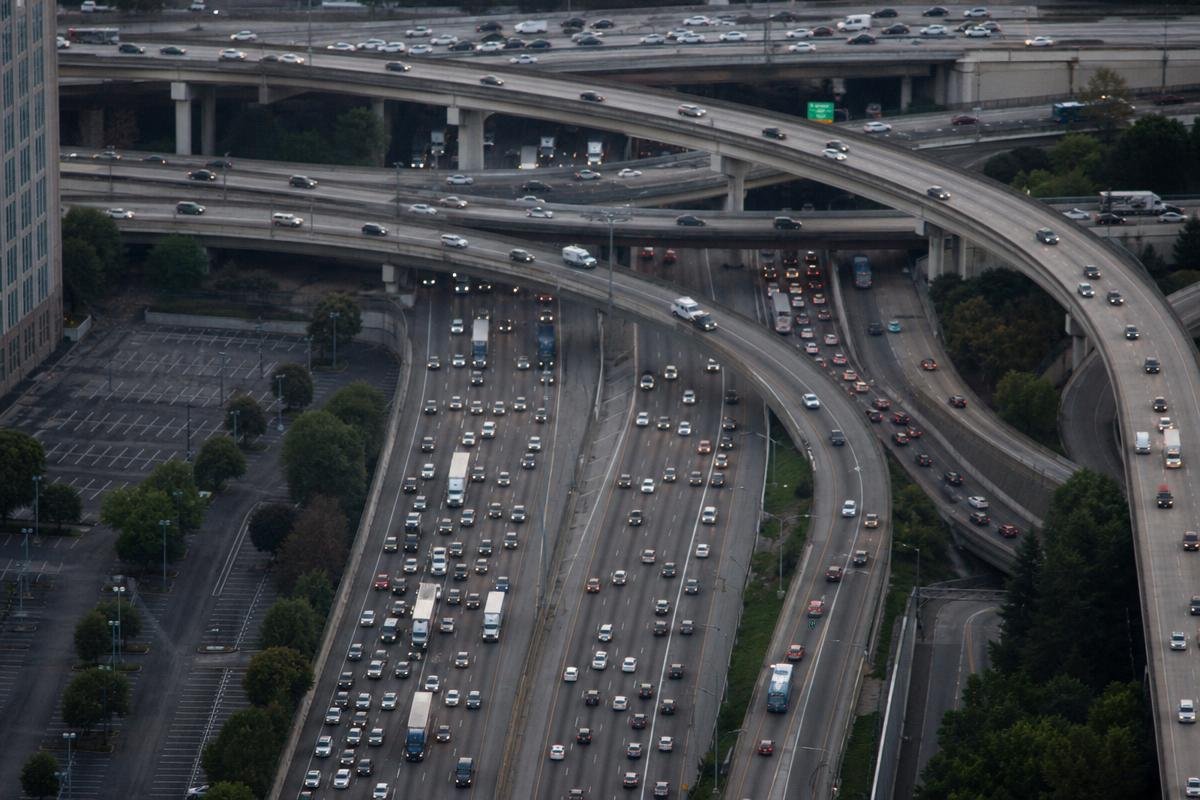
Atlanta drivers regularly encounter high-traffic interchanges, busy surface streets, and corridors shared by vehicles, pedestrians, and cyclists. Understanding the road and traffic conditions that can increase risk can help you plan a safer route and know what to do after a collision. Below is an overview of 10 Atlanta roads drivers should watch.
Injured on one of Atlanta's most dangerous roads? Find out what your case may be worth.
Key Takeaways
- High traffic volume, complex interchanges, limited crossing infrastructure, and driver behavior can increase crash risk on Atlanta roads.
- Interstate interchanges, aging surface streets, and pedestrian infrastructure can increase risk on certain corridors.
- A dangerous road does not automatically mean a clear path to compensation. Fault must still be established under Georgia law.
- Under Georgia's modified comparative fault rule, you can still recover compensation if you are less than 50 percent at fault for the crash.
- Insurance companies may evaluate claims closely after a crash. Knowing your rights early matters.
What Makes Atlanta Roads So Dangerous?
Atlanta's roadway network includes major interstate corridors, busy surface streets, and areas shared by vehicles, pedestrians, and cyclists. These conditions can make some trips more challenging, especially during peak travel periods. Public traffic and crash-data resources can help drivers understand how conditions vary across metro Atlanta.
High Traffic Volume and Interchange Complexity
I-285, I-85, I-75, I-20, and GA-400 all intersect within the metro area. That convergence creates merge points, weave zones, and short on-ramps that force rapid lane changes at highway speeds. The I-285/I-85 interchange in Doraville, known locally as Spaghetti Junction, requires drivers to navigate multiple merging and diverging lanes in a short distance.
GA-400 serves the Sandy Springs and Buckhead corridors, where changing traffic volume, merging activity, short acceleration ramps, and differences between entering and through traffic can require added attention from drivers.
Infrastructure Age and Road Design Deficiencies
Surface streets including Campbellton Road SW and Cascade Road SW can present challenges for drivers, pedestrians, and cyclists. Road conditions vary by location and can change over time. US-278 through DeKalb County includes busy intersections where commercial vehicles and passenger cars share the roadway.
Distracted and Impaired Driving on Urban Corridors
Road design, traffic volume, and unsafe driving behavior can combine to increase the risk of a serious crash. Along Memorial Drive, frequent stops, turning vehicles, rideshare pickups, and changing traffic patterns can require added attention from drivers. If you were injured on this corridor near the Decatur line, our personal injury team serving Decatur can help. Distracted or impaired driving can make already challenging traffic conditions more dangerous. If a crash involves suspected impairment, the facts of the collision and available evidence can be important to an injury claim.
10 Atlanta Roads Drivers Should Watch
These roads have traffic, intersection, or road-design characteristics that can increase driving risk. Conditions change by time of day, traffic volume, weather, and driver behavior, so this list is not a crash ranking.
1. I-285 (The Perimeter)
I-285 circles metro Atlanta and carries a mix of commuter, passenger, and commercial traffic. The interchange with I-85 near Doraville includes multiple merging lanes in a compressed weave zone. Truck accident cases here often involve federal FMCSA regulations on top of standard tort law, which adds complexity to any injury claim.
2. I-85 Through Midtown and Northeast Atlanta
I-85 compresses high-speed commuter traffic into narrow lanes through dense urban sections. The Brookwood Interchange, where I-85 and I-75 split near the Midtown and Ansley Park line, combines high traffic volume with frequent lane changes and on-ramp activity.
3. Covington Highway (US-278)
Covington Highway runs through Stone Mountain and DeKalb County and combines commercial truck traffic, local residential access, and frequent pedestrian crossings. Drivers should use extra care at busy intersection clusters, including those near Hairston Road.
4. Campbellton Road SW
Campbellton Road cuts through zip codes 30310 and 30331, including the Ben Hill and Adamsville neighborhoods. Drivers, pedestrians, and cyclists may encounter busy intersections, turning vehicles, and changing traffic conditions along this corridor. If you were hurt here as a pedestrian, your case may involve both driver negligence and premises liability questions about sidewalk maintenance. Understanding pedestrian accident risks on Atlanta roads is essential before you speak with an insurer.
5. Cascade Road SW
Cascade Road SW runs through Cascade Heights and connects to several high-traffic commercial corridors in the 30311 zip code. Multiple driveways, turning movements, and changing traffic conditions can make this corridor more challenging to navigate.
Were you hit by a commercial truck on I-285 or one of these corridors? Truck cases involve federal FMCSA rules and carrier liability that a standard car claim does not. Call (770) 502-6116 to find out how those rules affect your case.
6. GA-400 Northbound
GA-400 serves Buckhead, Sandy Springs, and the commuter flow toward Roswell and Alpharetta. The stretch approaching the I-285 interchange can involve high-speed merging and heavy peak-hour traffic, which may increase the likelihood of sudden braking and rear-end collisions. If you were injured on this corridor, our personal injury team handles cases throughout this stretch.
7. Memorial Drive (US-78)
Memorial Drive is a primary east-west arterial running through East Atlanta Village, Candler Park, and Kirkwood before reaching Decatur. Commercial vehicle traffic, rideshare pickups and drop-offs, and multiple unprotected left turns create layered crash risk. Angle crashes and rideshare-involved collisions can occur on this road.
8. Northside Parkway NW
Northside Parkway moves significant traffic between Buckhead and the Perimeter with curves and grade changes that reduce sight lines. Speed and limited sight lines can make careful driving especially important on this corridor.
9. 10th Street NW
10th Street NW sees bicycle and e-scooter activity through Midtown. Turning-vehicle conflicts can create risks for cyclists and other road users.
10. Alpharetta Highway (GA-9)
GA-9 connects Roswell and Alpharetta through a mix of commercial strips and residential neighborhoods. Driveway access, through traffic, and turning movements can require added attention from drivers.
Atlanta's Most Dangerous Interstates: A Closer Look at I-285, I-85, and GA-400
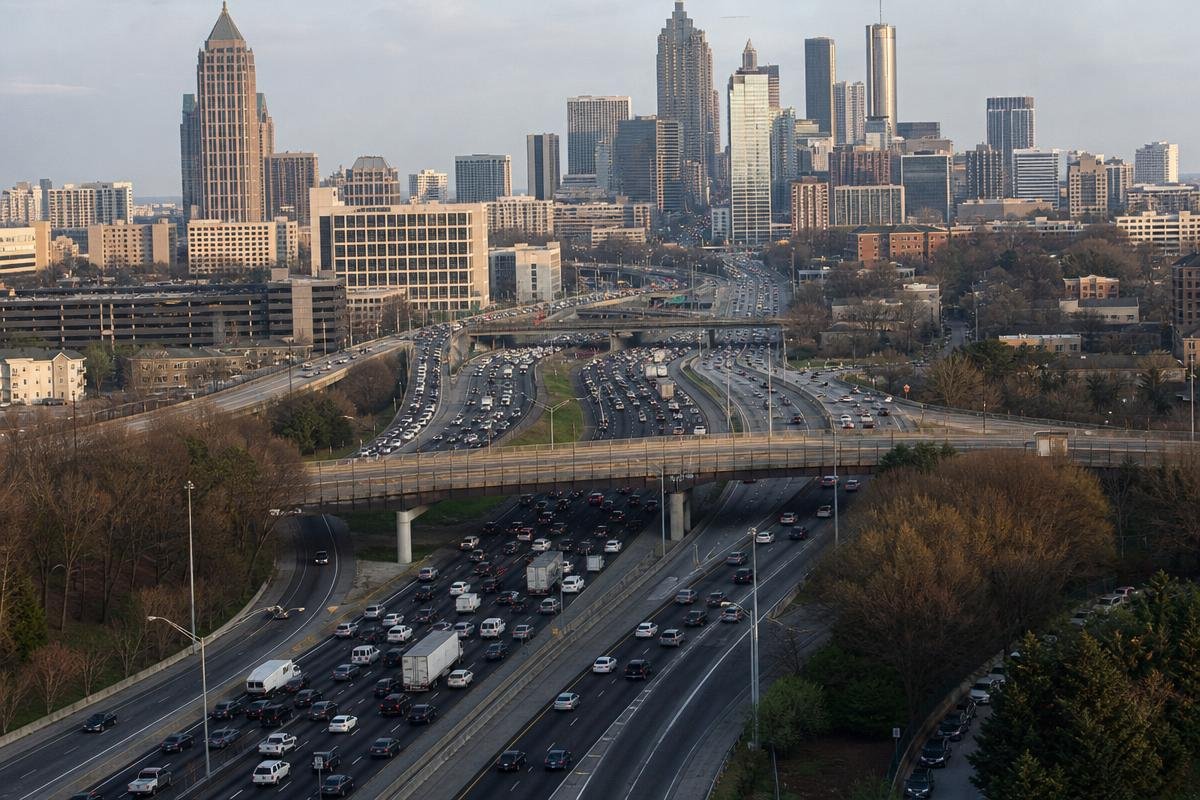
I-285, I-85, and GA-400 each combine heavy traffic with design and traffic conditions that can require drivers to make quick decisions.
Why Is Spaghetti Junction So Crash-Prone?
The I-285 and I-85 interchange near Doraville involves multiple merging and diverging lanes in a compact area. Drivers may need to change lanes, adjust speed, and follow overhead signage within a short distance. Those conditions can increase the risk of rear-end, sideswipe, and multi-vehicle crashes.
The weave zone leaves almost no margin for distraction or hesitation. A single driver braking unexpectedly can trigger a chain reaction across three or four lanes. The interchange is not uniquely dangerous because of its volume alone. It is dangerous because its geometry forces high-stakes decisions in seconds.
Truck Corridors on I-75 and I-20: Federal Rules and Carrier Liability
Crashes involving commercial vehicles can raise additional questions about the driver, the carrier, vehicle maintenance, and available insurance coverage.
Depending on the facts, more than one party may be relevant to the claim.
GA-400 Speed Transitions and the Sandy Springs Interchange
Drivers approaching the I-285 interchange may encounter changing traffic speeds, merging activity, and peak-hour congestion.
This stretch serves commuters from Sandy Springs and Roswell. Traffic conditions, speed changes, and interchange ramp activity can require added attention from drivers.
Pedestrian and Cyclist Danger on Atlanta's Most Hazardous Roads
Pedestrians and cyclists face a different category of risk than drivers on the same roads. They have no protective frame around them. When a crash happens, the injuries are severe.
Atlanta's Highest-Conflict Pedestrian Corridors
Campbellton Road SW and Memorial Drive can present challenges for people walking, particularly where traffic is heavy and crossing options are limited. Conditions can vary by location and time of day, including traffic volume, visibility, crossing options, roadway design, and driver behavior.
The facts of a pedestrian crash, including the crossing location, driver behavior, visibility, and roadway conditions, can all be relevant to the claim.
Bicycle and E-Scooter Crashes in Midtown and East Atlanta
10th Street NW in Midtown and Beltline-adjacent corridors in Old Fourth Ward and Inman Park have high levels of bicycle and e-scooter activity. Georgia traffic rules for people riding bicycles and e-scooters can depend on the device, roadway, and circumstances of the crash.
If you were injured while riding a bicycle or e-scooter, our Atlanta bicycle and e-scooter accident page explains the legal options that may be available.
Georgia Law on Driver Duty and Comparative Fault for Pedestrian Crashes
Under O.C.G.A. § 40-6-93, drivers must exercise due care to avoid colliding with a pedestrian regardless of crosswalk location. A driver who was speeding, distracted, or impaired cannot shift full liability to a pedestrian simply because that person crossed outside a marked crosswalk.
The state's modified comparative fault rule, O.C.G.A. § 51-12-33, means that if you are less than 50% responsible for the crash, you can still recover compensable losses, reduced by your share of fault. Being partially at fault does not end your case.
Injured as a pedestrian or cyclist on one of these corridors? Call us at (770) 502-6116 to talk through what happened and what your options are.
What to Do If You're Injured on One of Atlanta's Dangerous Roads
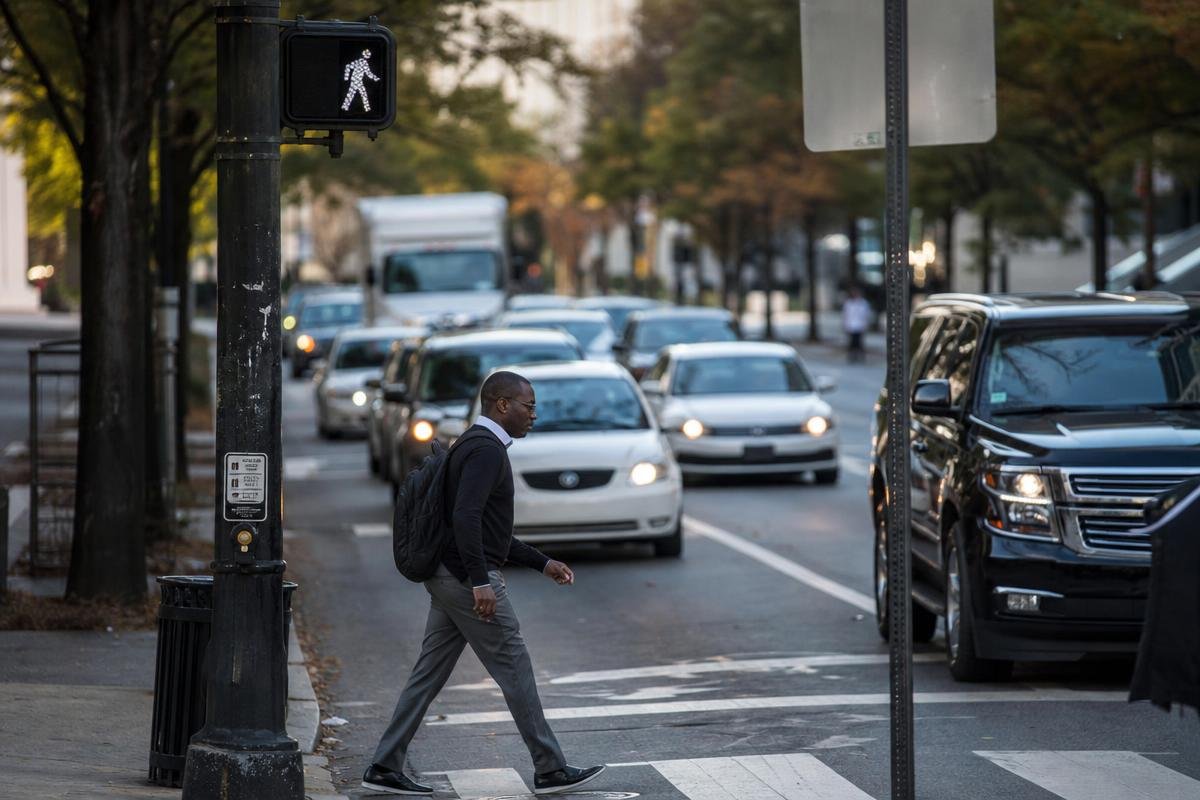
The decisions you make in the first hours after a crash directly affect your ability to recover the full value of your losses. Acting quickly and correctly matters.
Immediate Steps at the Scene
Call 911 and request a police report. The report creates an official record of the incident and may be important during a claim investigation. If it is safe to do so, obtain the report number before leaving the scene.
Seek medical attention even if you feel fine. Soft tissue injuries and traumatic brain injuries frequently appear hours or days after impact. A gap in medical care gives insurers a reason to dispute your claim.
Consider speaking with an attorney before providing a recorded statement to an insurance company.
Preserving Evidence Before It Disappears
Photograph the scene, your vehicle, road conditions, and any visible injuries before you leave, if it is safe to do so. Camera footage may be subject to limited retention periods, so prompt action can help preserve relevant evidence.
An attorney can send a spoliation letter, a formal legal notice requiring the responsible party to preserve evidence, within hours of being retained. The same urgent timeline applies after distracted driving accidents in Atlanta, where phone data and camera footage are equally time-sensitive.
Georgia's Statute of Limitations for Crash Injuries
Legal deadlines can apply after a crash, and the applicable deadline may depend on the type of claim and the parties involved. Speaking with an attorney promptly can help you understand the deadlines that may apply to your situation.
If you are unsure where to start, reviewing how to file a personal injury claim in Georgia can help you understand the full process before your first conversation with an attorney.
How Atlanta's Road Conditions Affect Fault and Compensation in a Crash Case
Road conditions do not automatically shift fault away from drivers. But when a crash happens on a road with recorded defects, the legal picture gets more complicated fast.
When Road Design Is a Factor: Government Liability
If a road defect contributed to your crash, a government entity may be relevant to the claim. Missing guardrails, failed signage, poor lighting, and sight-line obstructions can be important facts, but liability depends on the responsible entity, applicable notice rules, and the circumstances of the crash.
Claims involving a government entity can involve special notice requirements and deadlines. The applicable rules can differ depending on the entity responsible for the road, so speak with an attorney promptly if a road defect may have contributed to the crash.
Modified Comparative Fault and How Insurers Use It Against You
Georgia law can affect how fault is evaluated after a crash. An attorney can review the facts of the collision and explain how responsibility may affect a potential claim.
Insurance companies may evaluate fault closely, especially when road conditions are part of the claim. Understanding how fault is determined can help you prepare for those questions. Understanding how fault is determined in a car accident in Georgia is essential before you speak with any adjuster.
Documenting Road Hazards to Build Your Case
Strong road condition claims rest on specific evidence. Crash reports. GDOT maintenance records. Prior incident reports from the same intersection. Expert testimony from traffic engineers.
Records related to maintenance, prior incidents, roadway design, and reported hazards may help clarify whether a road condition played a role in a crash. An attorney can evaluate which records may be relevant to the circumstances of the case. If you are ready to move forward, reviewing how to file a personal injury claim in Georgia is a practical first step.
Atlanta Neighborhoods and Corridors with Elevated Crash Risk in 2026
Crash risk can vary across metro Atlanta based on traffic volume, roadway design, time of day, weather, and driver behavior.
Southwest Atlanta: Campbellton and Cascade Corridors
Zip codes 30310, 30311, and 30331 cover the Campbellton and Cascade corridors through neighborhoods like Adamsville, Cascade Heights, and Ben Hill. Traffic volume, speed conditions, and roadway design can affect crash risk on these corridors.
Uninsured or underinsured motorist coverage may be relevant when the at-fault driver has limited or no available insurance. The available coverage depends on the policy terms and the facts of the crash.
East Atlanta and DeKalb: Covington Highway and Memorial Drive
The US-278 corridor runs through Stone Mountain and Lithonia before reaching the Decatur area. Memorial Drive connects East Atlanta Village and Kirkwood into Decatur as a primary east-west arterial. Both roads carry a mix of commercial vehicle, local, and rideshare traffic that can make collision circumstances more complex.
If you were injured along either corridor, a personal injury attorney serving Decatur can review the facts of the crash, identify potentially relevant insurance coverage, and explain the options that may be available.
Buckhead, Sandy Springs, and the Northern Corridors
GA-400 and Northside Parkway serve zip codes 30305, 30327, 30328, and 30342, with commuter traffic flowing in from Johns Creek and further north. High speeds and complex interchange geometry can make these corridors more challenging to navigate.
A personal injury attorney Sandy Springs, GA familiar with these corridors understands how to document speed-related severity and interchange fault issues specific to this stretch of dangerous roads in Atlanta.
Frequently Asked Questions
What is the most dangerous road in Atlanta?
Road risk can vary by time of day, traffic volume, weather, road conditions, and driver behavior. Reviewing current GDOT and local crash data can provide the most reliable information for a specific corridor.
Can I sue the government if a road defect caused my crash?
A government entity may be involved when a road defect contributed to a crash. These claims can have special notice requirements and deadlines that vary by the responsible entity, so speak with an attorney promptly.
How long do I have to file a lawsuit after a crash in Georgia?
Legal deadlines can apply after a crash, and the applicable deadline may depend on the type of claim and the parties involved. Speaking with an attorney promptly can help you understand the deadlines that may apply to your situation.
What happens if the driver who hit me had no insurance?
Under O.C.G.A. § 33-7-11, your own uninsured/underinsured motorist (UM/UIM) coverage may be relevant when the at-fault driver carries no insurance or insufficient coverage. An attorney can review your policy and identify every available source of recovery.
How much does it cost to hire an Atlanta car accident lawyer?
We offer free case reviews with no obligation. We work on a contingency fee basis, meaning no attorney fees unless we recover compensation for you. You can read more about how personal injury lawyer contingency fees work before you decide anything.
What types of compensation can I recover after an Atlanta crash?
Compensable losses include medical expenses, lost wages, future medical care, and pain and suffering. In cases involving particularly egregious conduct, O.C.G.A. § 51-12-5.1 allows punitive damages. The full value of your claim depends on injury severity, clarity of fault, and available insurance coverage.
If you or someone you know was injured in a crash, prompt action can help preserve available evidence and clarify the facts of the incident. Our team handles crash cases across the metro area, including Marietta, the Decatur area, and surrounding communities. We offer free case reviews with no obligation. Call us at (770) 502-6116 or reach out online.
Ready to Get Started with Cambre & Associates Injury & Accident Lawyers?
Call (770) 502-6116 to speak with our team directly. We're ready to answer your questions, walk you through your options, and help you find the right solution for your needs. Whether you're just starting to plan or ready to move forward, we'll make the process simple and stress-free.
Reach out today and let's talk about how we can help.
If you were injured and have questions about your rights, speak with an Atlanta car accident attorney at Cambre & Associates. Our Atlanta personal injury lawyers offer free consultations and charge no fee unless we recover compensation for you.