



The Georgia open container law makes it an offense to drink alcohol or hold an open container of alcohol in the passenger area of a vehicle on a public road. The rule is not limited to the driver. It reaches passengers too, with a few specific exceptions.
If you were hurt in a crash where alcohol was found in a vehicle, these rules can also shape what evidence exists afterward. Cambre & Associates helps injured Georgians in metro Atlanta understand how traffic laws like this one connect to an injury claim. Below, you will find what the statute says, who can be charged, and what to do after a crash.
Have questions about a crash that involved alcohol? Talk with our team for free.
Key Takeaways
- Under O.C.G.A. § 40-6-253, no one may drink alcohol or possess an open alcoholic beverage container in the passenger area of a motor vehicle on the roadway or shoulder of a public highway.
- A locked glove compartment does not count as part of the passenger area, and neither does the area behind the rearmost upright seat in a car without a trunk.
- Only the person who drinks or possesses the open container can be charged, but a driver who is alone in the passenger area is deemed to possess any open container there.
- Passengers in vehicles used primarily to carry people for compensation, and people in the living quarters of a motor home or house trailer, fall outside the rule.
- A violation carries a fine that cannot exceed $200 under the statute.
- After a crash, an open container noted by police may be relevant evidence, and most Georgia personal injury claims must be filed within two years under O.C.G.A. § 9-3-33.
What the Georgia Open Container Law Says
Georgia’s open container rule is found in O.C.G.A. § 40-6-253. It is short, but each word has a defined meaning. Knowing those definitions is the easiest way to understand what the law does and does not cover.
The core rule appears in subsection (b). A person shall not consume any alcoholic beverage, or possess any open alcoholic beverage container, in the passenger area of any motor vehicle that is on the roadway or shoulder of any public highway.
That last part matters. The statute is written around vehicles on a public highway, including the shoulder. So the rule is tied to where the vehicle is, not only to whether it is moving.
What Counts as an Alcoholic Beverage
The statute defines “alcoholic beverage” in three parts. It covers beer, ale, porter, stout, and similar fermented drinks, including sake, that contain one half of 1 percent or more of alcohol by volume. It covers wine of not less than one half of 1 percent alcohol by volume. It also covers distilled spirits, meaning ethyl alcohol in any form, including dilutions and mixtures.
In plain terms, beer, wine, and liquor are all included, along with mixed drinks made from them.
What Counts as an Open Container
An “open alcoholic beverage container” is any bottle, can, or other receptacle that contains any amount of alcoholic beverage and either is open or has a broken seal, or has had some of its contents removed.
Notice the words “any amount.” A can with only a sip left can still qualify. A bottle that has been recapped after someone drank from it can also qualify, because some of the contents were removed.
There is one carve out in the definition. A container that has been sealed or resealed under Code Section 3-5-4 or 3-6-4 is not an open container for purposes of this law. Those sections deal with resealing, which is why a properly resealed bottle is treated differently from a loosely recapped one.
What Counts as the Passenger Area
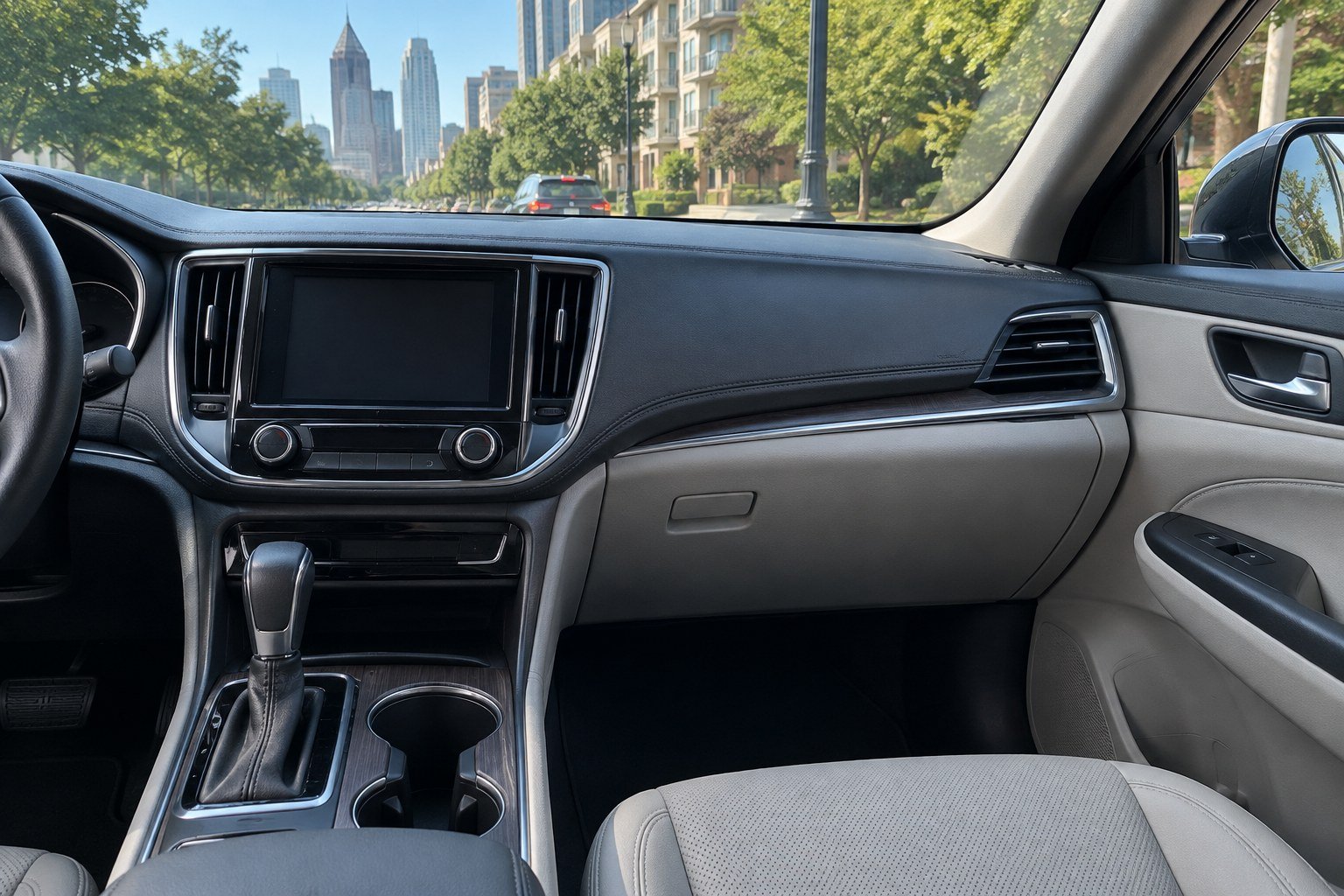
The “passenger area” is the area designed to seat the driver and passengers while the vehicle is in operation. It also includes any area that is readily accessible to the driver or a passenger while seated.
The statute then lists what is not included:
- Any locked glove compartment.
- In a passenger car not equipped with a trunk, any area behind the rearmost upright seat.
- In a passenger car not equipped with a trunk, any area not normally occupied by the driver or passengers.
So if you are carrying an opened bottle of wine home, a trunk or a locked glove box is the kind of place the statute treats as outside the passenger area. In a hatchback or SUV without a trunk, the area behind the last upright row of seats is treated the same way.
Who Can Be Charged Under the Open Container Rule
A common question is whether a driver gets in trouble for a passenger’s drink. The statute answers this directly in subsection (b)(3).
The Person Who Drinks or Possesses the Container
Only a person who consumes an alcoholic beverage or possesses an open container in violation of the law shall be charged with the offense. In other words, the charge follows the person who actually has the drink.
If a passenger is holding an open beer, the statute points to the passenger, not automatically to the driver. If the driver is drinking, the driver can be charged.
The Driver Alone Presumption
There is an important twist. A driver who is alone in the passenger area of the vehicle is deemed to be in possession of any open alcoholic beverage container in that passenger area.
This means a solo driver cannot avoid the rule by saying the open can belonged to someone else who left earlier. If you are the only person in the car and an open container is within the passenger area, the law treats it as yours.
Quick Reference Table
| Situation | What O.C.G.A. § 40-6-253 Says |
|---|---|
| Driver alone with an open can in the cup holder | The driver is deemed to possess the open container. |
| Passenger holding an open drink in a private car | Only the person who consumes or possesses it shall be charged. |
| Opened bottle in a locked glove compartment | A locked glove compartment is not part of the passenger area. |
| Opened bottle behind the rearmost upright seat in a car with no trunk | That area is not part of the passenger area. |
| Passenger in a vehicle used primarily to carry people for compensation | The rule in subsection (b)(1) does not apply to that passenger. |
| Person in the living quarters of a motor home or house trailer | The rule in subsection (b)(1) does not apply. |
| Penalty for a violation | A fine not to exceed $200. |
Hurt in a crash and not sure where to start? Call Cambre & Associates at (770) 502-6116. We accept calls 24/7.
Exceptions and Penalties You Should Know
The statute includes two exceptions in subsection (b)(2). Both are narrow, so it helps to read them closely.
Passengers in Vehicles for Hire
The rule does not apply to any passenger in the passenger area of a motor vehicle designed, maintained, or used primarily for the transportation of persons for compensation.
Two details stand out. First, the exception covers passengers, not the driver. Second, it applies to vehicles designed, maintained, or used primarily to carry people for pay. The statute does not list specific types of vehicles, so whether a particular ride fits depends on the facts. If you were hurt as a passenger in a rideshare, our page on Uber and Lyft accident claims explains how those cases are handled.
Motor Home and House Trailer Living Quarters
The rule also does not apply in the living quarters of a motor home or house trailer. The statute says “living quarters,” so this exception is tied to that part of the vehicle, not to the whole vehicle.
The Penalty for a Violation
Subsection (c) states that any person who violates the law is subject to a fine not to exceed $200. That is the penalty the statute itself sets out.
The statute’s text does not require that anyone be impaired. Under subsection (b), a sober passenger who possesses an open container in the passenger area can still violate it.
How Alcohol in a Vehicle May Matter After an Atlanta Crash
The open container law is a traffic rule, not an injury law. Still, if you were hurt in a collision on I-75, I-85, I-285, or a surface street in Atlanta, the presence of alcohol in the other vehicle may become part of the story.
An open container does not by itself prove that someone was impaired or caused a crash. But it may be relevant evidence, and an attorney can review how it fits with everything else that happened.
The Police Report
When officers respond to a crash, they often note what they see in and around the vehicles. If an officer observed an open container or cited someone under O.C.G.A. § 40-6-253, that detail may appear in the report.
Get a copy of the report once it is available and read it carefully. If you believe something in it is wrong, our post on whether a police report can be changed after an accident walks through your options.
Evidence to Preserve
Evidence can disappear quickly after a crash. Vehicles get towed and repaired, and memories fade. If you are able to do so safely, try to keep or gather the following:
- Photos of the scene, the vehicles, and anything visible inside the other car, taken from where you are allowed to stand.
- Names and phone numbers of witnesses who saw the crash or the people involved.
- The report number and the names of responding officers.
- Any citation information you are given.
- Medical records and bills from every provider who treats you.
- Receipts or records that show where the other driver may have been beforehand, if you learn of them.
Never touch or move items inside another person’s vehicle. Leave the scene investigation to police. For a broader checklist, see our checklist on what to do after a car accident.
When Impaired Driving Is Involved
If the other driver was drinking and driving, your situation may go beyond an open container question. We cover that topic in more depth in our post on why you need a lawyer after a drunk driving accident in Atlanta.
Bars, Hosts, and the Limits of Georgia’s Dram Shop Law
People sometimes ask whether the place that served the alcohol can be held responsible. Georgia answers this in O.C.G.A. § 51-1-40, and the rule is narrow.
The General Rule
The General Assembly declared that the consumption of alcohol, rather than the sale, furnishing, or serving of it, is the proximate cause of injury inflicted by an intoxicated person, except as provided in the statute. The law then says a person who sells, furnishes, or serves alcohol to a person of lawful drinking age does not become liable just by doing so.
The Two Exceptions
Under subsection (b), a provider may become liable for injury or damage caused by the intoxication when the sale, furnishing, or serving is the proximate cause, in two situations:
- The provider willfully, knowingly, and unlawfully serves someone who is not of lawful drinking age, knowing that person will soon be driving a motor vehicle.
- The provider knowingly serves someone who is in a state of noticeable intoxication, knowing that person will soon be driving a motor vehicle.
The statute also states that it does not authorize the person who drank to recover from the provider for his or her own injuries.
Private Premises
Subsection (d) adds another limit. A person who owns, leases, or lawfully occupies a premises, other than one licensed to sell alcohol, is not liable when someone drinks there in the absence of and without the consent of the owner, lessee, or lawful occupant.
Because these rules turn on what the provider knew, they depend heavily on the facts. An attorney can review whether either exception may apply.
Passengers, Shared Fault, and Filing Deadlines
If you were a passenger in a car where alcohol was present, you may wonder whether that affects a claim. Georgia’s apportionment statute, O.C.G.A. § 51-12-33, is the starting point.
How Fault Is Divided
When a plaintiff is to some degree responsible for the injury or damages claimed, the trier of fact determines the plaintiff’s percentage of fault, and the judge reduces the damages in proportion to that percentage.
The statute also says the plaintiff shall not be entitled to receive any damages if the plaintiff is 50 percent or more responsible for the injury or damages claimed.
The statute does not say that riding with someone who has alcohol in the car makes a passenger at fault. Fault is decided on the facts of each case. For more on how this works in general, read our posts on Georgia comparative negligence law and how fault is determined in a Georgia car accident.
Fault of Others Who Are Not Parties
Under subsection (c), the trier of fact considers the fault of all persons or entities who contributed to the injury, whether or not they were named in the suit. That can matter when more than one driver or business may share responsibility.
The Two Year Deadline
Under O.C.G.A. § 9-3-33, actions for injuries to the person generally must be brought within two years after the right of action accrues. Actions for injuries to the person involving loss of consortium must be brought within four years.
The statute opens by noting that other provisions of Georgia law may provide otherwise, so other rules may change a deadline in some cases. Waiting can make it harder to preserve evidence, so it is wise to ask questions early. The information on this page is general information, not legal advice for your situation.
If you were injured in a collision, learn how our team handles car accident claims in Georgia, then reach out for a free consultation.
Frequently Asked Questions
Can a passenger drink alcohol in a car in Georgia?
In most private vehicles, no. O.C.G.A. § 40-6-253 says a person shall not consume alcohol or possess an open container in the passenger area of a motor vehicle on the roadway or shoulder of a public highway. The exceptions cover passengers in vehicles used primarily to carry people for compensation and people in the living quarters of a motor home or house trailer.
Will the driver be charged for a passenger’s open container?
The statute says only the person who consumes alcohol or possesses the open container shall be charged. So a passenger holding an open drink is the one the law points to. The exception is a driver who is alone in the passenger area. In that case, the driver is deemed to possess any open container found there, even if it belonged to someone else.
Where can I legally carry an opened bottle of wine?
The statute excludes certain spaces from the passenger area. A locked glove compartment is not part of it. In a passenger car without a trunk, the area behind the rearmost upright seat, or an area not normally occupied by the driver or passengers, is also excluded. A container properly resealed under Code Section 3-5-4 or 3-6-4 is not considered open.
What is the fine for an open container violation in Georgia?
Subsection (c) of O.C.G.A. § 40-6-253 states that any person who violates the law is subject to a fine not to exceed $200. That is the penalty written into the open container statute itself.
Does an open container prove the other driver caused my crash?
Not on its own. An open container shows that alcohol was present in the passenger area, but fault in a crash depends on what actually happened on the road. Still, an officer’s notes about an open container may be relevant evidence alongside photos, witness statements, and other records. An attorney can review how the pieces fit together in your situation.
Can I sue the bar that served the other driver?
Possibly, but Georgia’s dram shop law is narrow. Under O.C.G.A. § 51-1-40, a provider may become liable only if it knowingly served a noticeably intoxicated person, or willfully and unlawfully served an underage person, knowing that person would soon be driving, and the serving was the proximate cause of the injury. These cases depend heavily on the facts.
Ready to Talk With Cambre & Associates?
If a crash left you hurt and you have questions about the Georgia open container law or how alcohol may factor into your claim, we are here to help. Call (770) 502-6116 for a free consultation. We work on a contingency fee basis, so you pay nothing unless we recover compensation. Our Atlanta office is at 2310 Parklake Dr NE, Suite 300, Atlanta, GA 30345.