



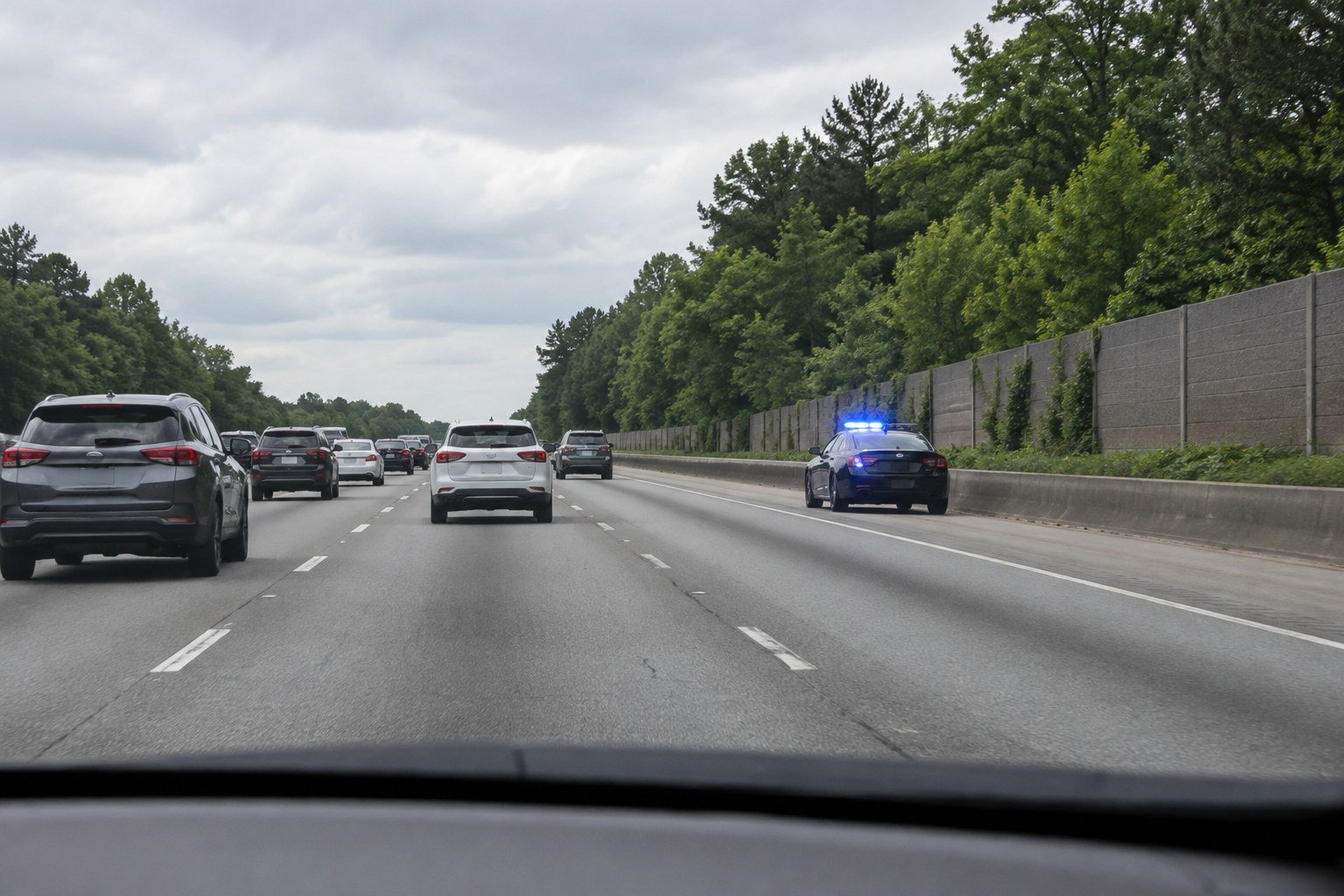
The Georgia move over law tells you exactly what to do when you come up on a stopped emergency vehicle, tow truck, highway maintenance truck, or utility service vehicle beside the road. The rule is officially called the Spencer Pass Law, and it is found at O.C.G.A. § 40-6-16.
On Atlanta interstates, people stopped on the shoulder are just feet from moving traffic. A driver who fails to move over or slow down can turn a routine stop into a serious crash.
Below, Cambre & Associates explains what the statute says, which lights trigger it, what changed in 2024, and what you can do if you are hurt while stopped on the shoulder.
Hurt in a roadside crash and not sure where to start? Our team offers a free consultation.
Key Takeaways
- Georgia’s Spencer Pass Law, O.C.G.A. § 40-6-16, requires drivers to approach certain stationary vehicles with due caution.
- When it is possible and safe, you must change into a lane that is not next to the stopped vehicle.
- If a lane change is impossible, prohibited, or unsafe, you must slow to a speed below the posted limit and be prepared to stop.
- The statute sets a fine of not more than $500 for emergency vehicles and not more than $250 for tow, maintenance, and utility vehicles.
- A 2024 amendment added “or revolving” lights and limited the tow, maintenance, and utility rule to yellow, amber, or white lights.
What Is the Spencer Pass Law?
Subsection (a) of O.C.G.A. § 40-6-16 says the Code section “shall be known and may be cited as the ‘Spencer Pass Law.’” It is commonly called the move over law.
The law is short. It has two main rules, one fine provision, and a few definitions. Even so, it applies on every road you drive in metro Atlanta, from I-75, I-85, I-20, I-285, and the Downtown Connector to local streets.
Two Separate Rules in One Statute
The statute splits covered vehicles into two groups:
- Subsection (b): stationary authorized emergency vehicles.
- Subsection (c): stationary towing or recovery vehicles, highway maintenance vehicles, and utility service vehicles.
Both groups trigger the same basic duty. You must approach with due caution and either move over or slow down. The differences are in which lights trigger each rule and how large the maximum fine is.
Instructions From a Peace Officer Come First
Both subsections say drivers must follow the move over steps “absent any other direction by a peace officer.” In plain terms, if an officer at the scene directs you to do something different, you follow the officer.
A Long Legislative History
According to the history note for the statute, the section was enacted in 2003 and has been amended several times since, including in 2006, 2011, 2016, and 2024. The most recent change took effect on July 1, 2024.
Which Vehicles and Lights Trigger the Move Over Rule?
The trigger depends on which kind of vehicle is stopped. In both cases, the vehicle must be stationary. The statute’s language refers to a “stationary” vehicle in each subsection.
Authorized Emergency Vehicles
Under subsection (b), the rule applies when you approach a stationary authorized emergency vehicle “that is displaying flashing yellow, amber, white, red, or blue lights.” That covers the familiar scene of a patrol car on the shoulder during a traffic stop or a fire truck parked at a crash.
Tow, Recovery, Highway Maintenance, and Utility Vehicles
Under subsection (c), the rule applies when you approach a stationary towing or recovery vehicle, highway maintenance vehicle, or utility service vehicle “that is utilizing traffic cones or displaying flashing or revolving yellow, amber, or white lights.”
Notice that traffic cones alone can trigger this part of the law. If a utility crew has set out cones beside its truck, you have the same duty to move over or slow down.
What Counts as a Utility Service Vehicle
Subsection (e) defines a utility service vehicle as any vehicle used by an employee or contractor of an entity in connection with providing utility services. The entity can be a political subdivision of the state, an electric cooperative, or a public or private corporation, among others.
“Utility services” is defined broadly. It includes electric, natural gas, water, waste-water, cable, telephone, and telecommunication services. It also includes repair, location, relocation, improvement, or maintenance of utility poles, transmission structures, pipes, wires, fibers, cables, easements, rights of way, and related infrastructure.
Quick Comparison of the Two Rules
| Feature | Subsection (b) | Subsection (c) |
|---|---|---|
| Vehicles covered | Stationary authorized emergency vehicles | Stationary towing or recovery, highway maintenance, and utility service vehicles |
| What triggers the rule | Flashing yellow, amber, white, red, or blue lights | Traffic cones, or flashing or revolving yellow, amber, or white lights |
| First choice | Lane change to a lane not adjacent, if possible and safe | Lane change to a lane not adjacent, if possible and safe |
| If a lane change is not possible | Slow below the posted limit and be prepared to stop | Slow below the posted limit and be prepared to stop |
| Maximum fine under subsection (d) | Not more than $500 | Not more than $250 |
If you were hurt by a driver who ignored these rules, you can reach Cambre & Associates at (770) 502-6116 to talk through what happened.
Change Lanes First, Then Slow Down if You Can’t
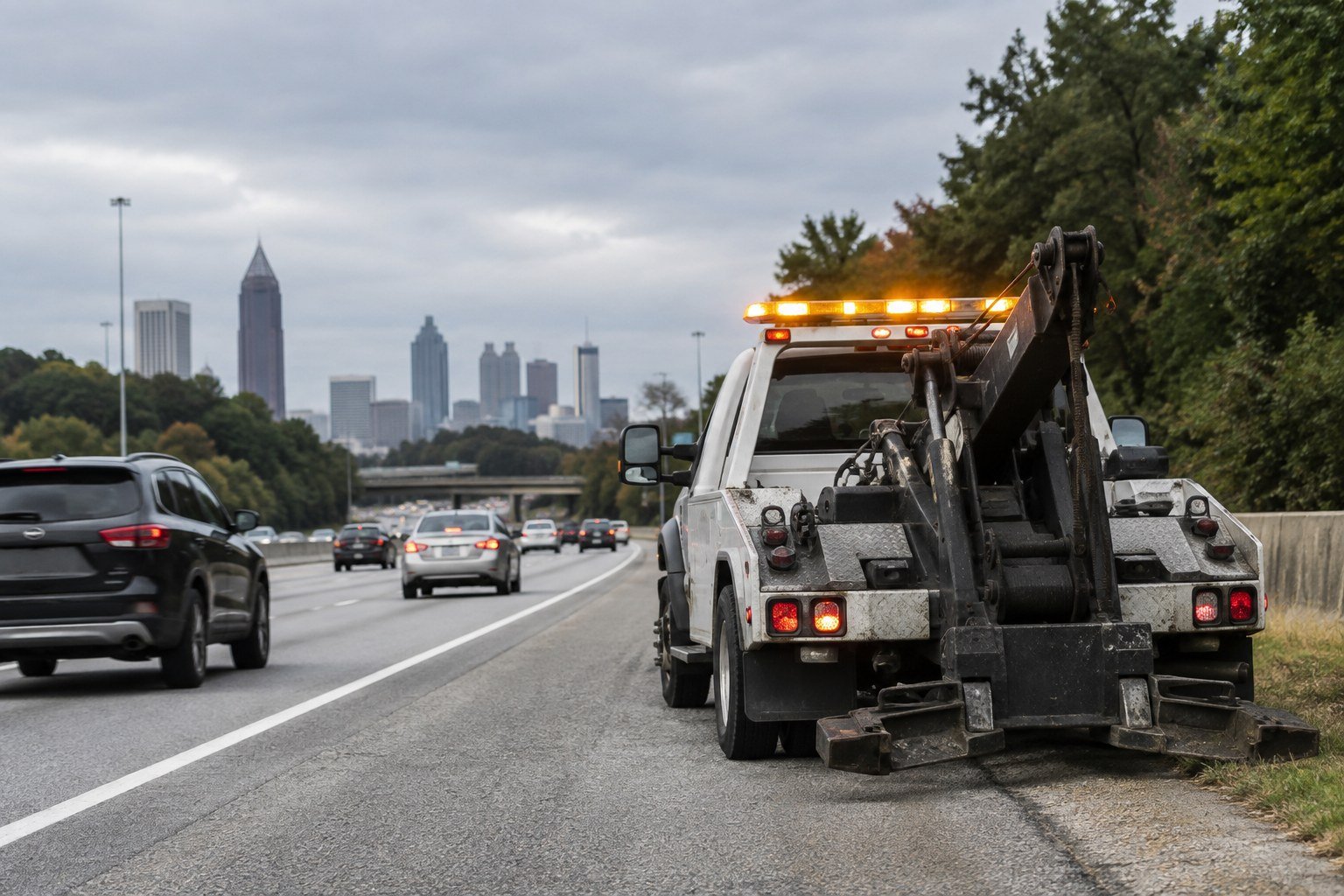
The move over law is often described as “move over or slow down.” That is accurate, but the order matters. The statute treats the lane change as the first choice and slowing down as the fallback.
Step One: Move Out of the Adjacent Lane
Paragraph (1) of both subsections tells you to “make a lane change into a lane not adjacent to” the stopped vehicle “if possible in the existing safety and traffic conditions.”
On a multi-lane interstate, that usually means moving one lane farther away from the shoulder where the vehicle is stopped. The goal is to put an empty lane between you and the people working beside the road.
Step Two: Slow Down if You Cannot Move Over
Paragraph (2) applies when a lane change “would be impossible, prohibited by law, or unsafe.” In that case, you must reduce your speed “to a reasonable and proper speed for the existing road and traffic conditions, which speed shall be less than the posted speed limit, and be prepared to stop.”
That language has three parts:
- Your speed must be reasonable and proper for the road and traffic at that moment.
- Your speed must be less than the posted speed limit.
- You must be prepared to stop.
Simply tapping the brakes while staying at the limit does not match the words of the statute.
Due Caution Applies Either Way
Both subsections begin by requiring drivers to “approach the authorized emergency vehicle with due caution” or to approach the tow, maintenance, or utility vehicle “with due caution.” That duty applies whether you change lanes or slow down.
Practical Habits That Help
- Scan far ahead so you see flashing lights and cones early.
- Signal and check your mirrors and blind spot before moving over.
- Put your phone away. Our post on what to do after a distracted driving accident in Atlanta covers why attention matters.
- If traffic is too heavy to merge, slow down below the limit instead of forcing your way over.
Fines Under the Georgia Move Over Law
Subsection (d) sets the penalties. The amount depends on which rule was broken.
Emergency Vehicle Violations
Under paragraph (d)(1), a violation of subsection (b) shall be punished by a fine of not more than $500. That applies to failing to move over or slow down for a stopped emergency vehicle.
Tow, Maintenance, and Utility Vehicle Violations
Under paragraph (d)(2), a violation of subsection (c) shall be punished by a fine of not more than $250. That applies to stopped towing or recovery, highway maintenance, and utility service vehicles.
Fines Are Only Part of the Picture
These are maximum fines for the traffic violation itself. They are separate from any civil claim an injured person may bring against a careless driver. If a driver who broke the move over law caused a crash, the traffic citation and the injury claim are two different matters.
Speed matters too. Georgia has separate rules for very high speeds, explained in our post on the Georgia Super Speeder law.
What Changed in the 2024 Amendment
The statute’s annotations explain that the 2024 amendment took effect July 1, 2024. It made two changes to the beginning of subsection (c).
“Or Revolving” Was Added
The amendment “inserted ‘or revolving.’” Before the change, the tow, maintenance, and utility rule referred to flashing lights. Now subsection (c) covers vehicles “displaying flashing or revolving yellow, amber, or white lights.”
Red Was Removed From the Subsection (c) Light Colors
The amendment also “substituted ‘or white’ for ‘white, or red’” in subsection (c). As a result, the light colors listed for tow, maintenance, and utility vehicles are now yellow, amber, and white. This change applies only to subsection (c). Subsection (b), which covers authorized emergency vehicles, still lists flashing yellow, amber, white, red, or blue lights.
Earlier Changes in 2016
According to the annotations, the 2016 amendment rewrote the start of subsection (c), added utility service vehicles to the lane change rule, split the fines into paragraphs (d)(1) and (d)(2), and added the definitions in subsection (e). Before 2016, subsection (c) covered tow, recovery, and highway maintenance vehicles only.
Why the Rule Matters on Metro Atlanta Interstates
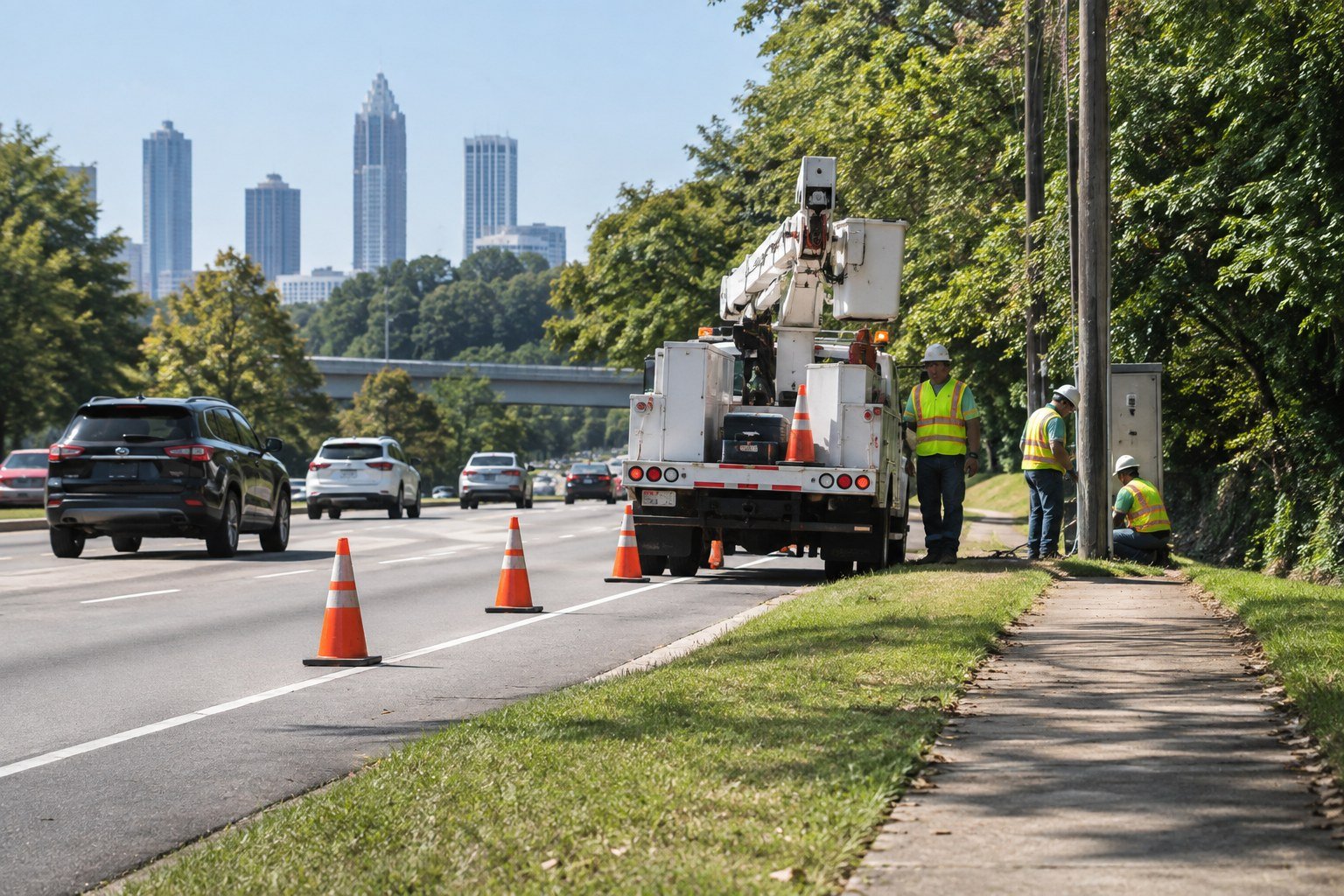
Interstates such as I-75, I-85, I-20, I-285, and the Downtown Connector run through metro Atlanta, and stopped vehicles on the shoulder sit just feet from moving lanes. Our post on the most dangerous roads in Atlanta for drivers looks at some of these corridors.
Tow Operators and Roadside Crews
Tow and recovery operators often work right beside traffic while hooking up a disabled car. Highway maintenance crews and utility workers may be outside their trucks with cones set out. Subsection (c) is aimed at protecting these situations.
Police, Fire, and Medical Responders
Officers conducting traffic stops and responders working a crash scene are often standing on the shoulder or in a closed lane. Subsection (b) requires drivers to give them space or slow down.
Stranded Drivers on the Shoulder
If your car breaks down, you are often waiting near the very vehicles this law covers. When a patrol car with its emergency lights on stops to help you, the move over rule applies to drivers approaching it. The same is true for a tow truck that is using traffic cones or displaying flashing or revolving yellow, amber, or white lights.
It is important to read the statute carefully here. As written, O.C.G.A. § 40-6-16 lists authorized emergency vehicles and towing or recovery, highway maintenance, and utility service vehicles. It does not list an ordinary passenger car with its hazard lights on.
Courts Apply the Statute to Real Traffic Stops
Georgia appellate courts have applied the statute in criminal cases. In Pierce v. State (2013), the Court of Appeals of Georgia upheld a conviction where a driver passed in the lane next to an officer conducting a traffic stop with blue emergency lights on, even though there was room to move safely into a farther lane.
What to Do if You Are Hit While Stopped on the Shoulder
Being struck while stopped on the shoulder can be frightening and confusing. These steps can help protect your health and your ability to pursue a claim.
Get to Safety and Call for Help
If you can move safely, get away from traffic. Call 911 to report the crash and request medical help. Let first responders check you even if you feel fine at first.
Document the Scene
- Photograph the vehicles, the shoulder, any cones or flashing lights, and the lane positions.
- Note whether any emergency, tow, maintenance, or utility vehicle was stopped nearby with lights on.
- Get names and contact details from witnesses, including tow operators or crew members.
- Ask how to get a copy of the police report.
Our post on what to do after a car accident walks through more of these steps.
How a Move Over Violation May Matter in a Claim
If the driver who hit you was cited for violating the move over law, that may be relevant evidence about how the crash happened. It is not the only factor. An attorney can review the police report, photos, and witness statements to see how the facts fit together.
Georgia also follows a comparative fault rule. Under O.C.G.A. § 51-12-33, damages can be reduced in proportion to an injured person’s share of fault, and a person who is 50 percent or more responsible cannot recover damages. Learn more in our post on Georgia comparative negligence law.
Watch the Filing Deadline
Under O.C.G.A. § 9-3-33, actions for injuries to the person generally must be brought within two years after the right of action accrues. Loss of consortium claims have a four year period. Waiting too long can cost you the right to file.
Let Someone Handle the Insurance Calls
After a roadside crash, you may hear quickly from insurance adjusters. Cambre & Associates handles communication with insurance companies for clients, so you can focus on recovery. Learn more about our work on car accident cases.
The information on this page is general information, not legal advice. Every crash is different, and a free consultation can help you get answers about your situation.
Ready to talk about a shoulder or roadside crash? Reach out today for a free consultation.
Frequently Asked Questions
Does the move over law apply on every road in Georgia?
The text of O.C.G.A. § 40-6-16 refers to “the operator of a motor vehicle approaching” a covered stationary vehicle and does not limit the rule to interstates. The duty to move over depends on whether a lane change into a lane not adjacent to the vehicle is possible. On a two-lane road, that may not be possible, so the slow down rule would apply instead.
What if I cannot safely change lanes?
The statute covers that situation. If a lane change “would be impossible, prohibited by law, or unsafe,” you must reduce your speed to a reasonable and proper speed for the road and traffic conditions. That speed must be less than the posted speed limit, and you must be prepared to stop. You still need to approach with due caution.
Do I have to move over for a tow truck?
Yes, when the conditions in subsection (c) are met. The rule applies to a stationary towing or recovery vehicle that is using traffic cones or displaying flashing or revolving yellow, amber, or white lights. You must move to a lane not adjacent to it if possible and safe, or slow below the posted limit and be prepared to stop.
What is the fine for violating the move over law?
Subsection (d) sets two maximum fines. A violation involving a stationary authorized emergency vehicle is punishable by a fine of not more than $500. A violation involving a stationary towing or recovery, highway maintenance, or utility service vehicle is punishable by a fine of not more than $250. These fines are separate from any injury claim.
Does the law protect a regular car stopped with hazard lights on?
As written, the statute lists authorized emergency vehicles and towing or recovery, highway maintenance, and utility service vehicles. It does not list ordinary passenger cars. If a driver hit your stopped car, an attorney can review the facts of your crash.
How long do I have to file an injury claim after a roadside crash?
Under O.C.G.A. § 9-3-33, actions for injuries to the person generally must be brought within two years after the right of action accrues. Claims for loss of consortium have a four year period. Exceptions can apply, so it is wise to speak with an attorney early rather than waiting until the deadline is close.
Ready to Talk With Cambre & Associates?
If a driver ignored the Georgia move over law and you were hurt on the shoulder, Cambre & Associates is here to listen. Call (770) 502-6116 for a free consultation. We work on a contingency fee basis, so you pay nothing unless we recover compensation. Our Atlanta office is at 2310 Parklake Dr NE, Suite 300, Atlanta, GA 30345.